On Oct. 5, the S&P 500 closed up about 0.5% at roughly 7,810, leaving it less than 1% below its Aug. 13 closing record. Market reports said the index was on track for its 28th record close of 2026 if that move holds in the closing tally.
The rally came even as the U.S. 10-year Treasury yield climbed to a 24-year high, underscoring how far equities and rates have moved in opposite directions. Since the last all-time closing high, only two of the S&P 500’s 11 sectors — technology and energy — have posted gains, with Nvidia, Apple and Microsoft doing much of the index-level lifting.
Kobeissi Letter said the S&P 500’s market capitalization had climbed above $71 trillion, with roughly $500 billion added in one session. The move highlights how concentrated the benchmark has become, and how much of its near-record stance still depends on a handful of mega-cap names.
There was no fresh company-specific catalyst attached to the move in the available reports. For traders, the key question now is whether higher yields keep weighing on breadth while the largest tech stocks continue to offset that pressure.
U.S. AI capex hits a record, but BofA says the trade is harder
New BEA-tracked data show computer and peripheral spending at a record $420.1 billion, while Bank of America says AI capex positioning is crowded and less easy to trade.
New U.S. business-spending data show outlays on computers and peripheral equipment rose by $20.5 billion in Q2 2026 to a record $420.1 billion. Markets often use that category as a proxy for AI-related hardware investment, making the print an important signal for the scale of the buildout.
Bank of America strategist Savita Subramanian says the popular trade of buying AI-capex beneficiaries and shunning consumer-driven names is getting harder. The bank argues that the market already reflects heavy AI spending, weaker discretionary demand, and increasingly crowded positioning.
The biggest beneficiaries remain the hyperscalers and the suppliers behind data-center buildouts, including Amazon, Microsoft, Alphabet and Meta, along with server and component makers. But the more crowded the trade becomes, the more likely investors are to scrutinize valuation support and rotation effects across consumer and non-AI sectors.
BofA’s point is not that AI spending is fading; it is that the market has already priced in a lot of it. That makes the next leg of performance more dependent on execution, not just the headline capex trend.
The U.S. Supreme Court on Monday heard arguments in a Boulder, Colorado climate lawsuit asking whether state-law claims against Exxon Mobil and Suncor Energy can proceed. With Justice Samuel Alito recused, a 4-4 split would leave the Colorado Supreme Court’s ruling intact and allow the case to move forward.
The dispute sits at the center of a broader legal battle over whether states and localities can use tort law to seek damages for climate-related harms. The companies argue climate change is a global issue governed by federal law, while Boulder says it is seeking compensation for costs tied to alleged deception and climate impacts, not direct regulation.
The stakes extend well beyond one case because dozens of similar lawsuits are pending nationwide. Several justices signaled concern about broad consequences, but the court did not give a clear indication of how it will ultimately rule.
For energy investors, the immediate focus is legal exposure rather than a company-specific operational shift. Any ruling that leaves room for state and local climate damage claims could keep attention on Exxon Mobil and Suncor as the industry continues to contest liability theories in multiple courts.
Multiple X signals say President Trump has signed an executive order easing restrictions on cheaper red-dyed diesel, with the goal of lowering near-record diesel prices. Another signal says the plan would expand access to tax-exempt dyed diesel.
Earlier reporting said the administration was also set to review certain diesel taxes through the Treasury and broaden access to tax-exempt dyed diesel. One signal cited U.S. diesel averaging $6.32 a gallon.
The policy is aimed at fuel-cost pressure and could matter for transport and refining-related expectations. A recent newsroom item on CLMT concerns its upcoming third-quarter earnings, but the X signals here do not provide a direct company-specific reaction.
The various posts broadly align on the same policy thrust: loosening limits on dyed diesel and cutting diesel costs. The exact order details, however, are being relayed through multiple media and reposts.
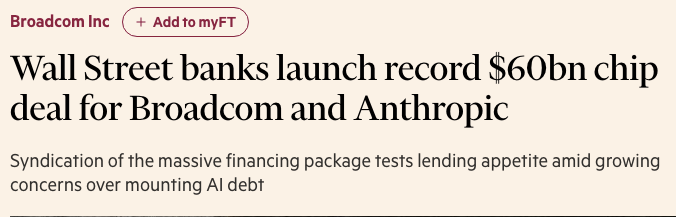
The Financial Times reported that Bank of America, Citigroup and Morgan Stanley have begun syndicating roughly $60 billion in debt financing tied to Anthropic’s lease of Google-designed AI chips. If completed, it would be the largest chip-financing package yet reported.
About $42 billion of the package is said to be supported by Broadcom-related backing, with the rest funded through the debt market. The deal underscores how AI infrastructure spending is increasingly being financed through structured capital-market transactions rather than straightforward equipment purchases.
For investors, Broadcom (AVGO) and Alphabet (GOOGL) sit at the center of the reported financing chain, while the three lead banks could benefit from underwriting and syndication fees. The report also highlights continued demand for large-scale debt in the AI buildout.
No full public term sheet has been disclosed, and the transaction appears to be in syndication rather than a finished financing. Further clarity would likely come from formal filing or company-level confirmation of the structure and obligations involved.
Bloomberg, citing people familiar with the matter, said OpenAI is in talks with several UAE investment funds, including Abu Dhabi-based MGX, to help anchor a $3 billion financing round. The report also said BlackRock is discussing participation.
The talks add another data point to OpenAI's ongoing search for large-scale funding support. Several X posts echoed the same Bloomberg story, pointing to sustained market attention on the size of the round and the possible backers.
In the material available here, BlackRock appears only as a potential participant in the financing discussion; there is no separate same-event follow-up in the site news library to corroborate the report. The wording remains tentative and based on people familiar with the matter.
For now, the key issue is the composition of the investor group and whether the talks move toward a completed financing package. No party confirmation was included in the sourced material.
Multiple signals indicate Alphabet’s Google and Constellation Energy have signed, or are close to signing, a nuclear power supply agreement. Reuters, CNBC, Bloomberg and other traders’ feeds all point to the same theme: locking in power for data-center growth.
The backdrop is a broader scramble by technology companies to secure electricity for expanding AI and cloud infrastructure. Recent coverage in the site’s news library also shows investors have been watching Constellation’s financing and growth profile closely.
Constellation is the direct market beneficiary, and several reports in the site’s library note its shares moved higher on the news. Alphabet is the demand-side counterpart, making the deal important for its long-term energy security.
Details remain inconsistent across early reports: some say the pact is a 20-year nuclear supply deal for 890 MW, while others describe a larger 3.6 GW or roughly 3.7 GW arrangement. Until the company provides fuller confirmation, those figures should be treated as provisional.
According to The Information, Meta and Microsoft are reducing employee use of Anthropic’s Claude inside their companies. The report says Microsoft has cut its internal Claude spending by more than one-third from a prior peak, while Meta’s Claude Code user count has fallen to about 30,000 from roughly 60,000 earlier this year.
The backdrop is the growing push by both companies to steer staff toward their own AI tools, including MetaCode and Muse Code. For Anthropic, the key issue is whether a softening in internal usage at two major customers signals slower enterprise penetration or simply a shift in product preference.
For investors, the headline keeps attention on Anthropic’s customer concentration and on how aggressively Microsoft and Meta are building in-house alternatives. It also highlights that large tech buyers are now treating AI usage more like a managed software budget than an open-ended experiment.
The report has been echoed by multiple market-news accounts on X, but no public response from Meta or Microsoft was included in the cited coverage.
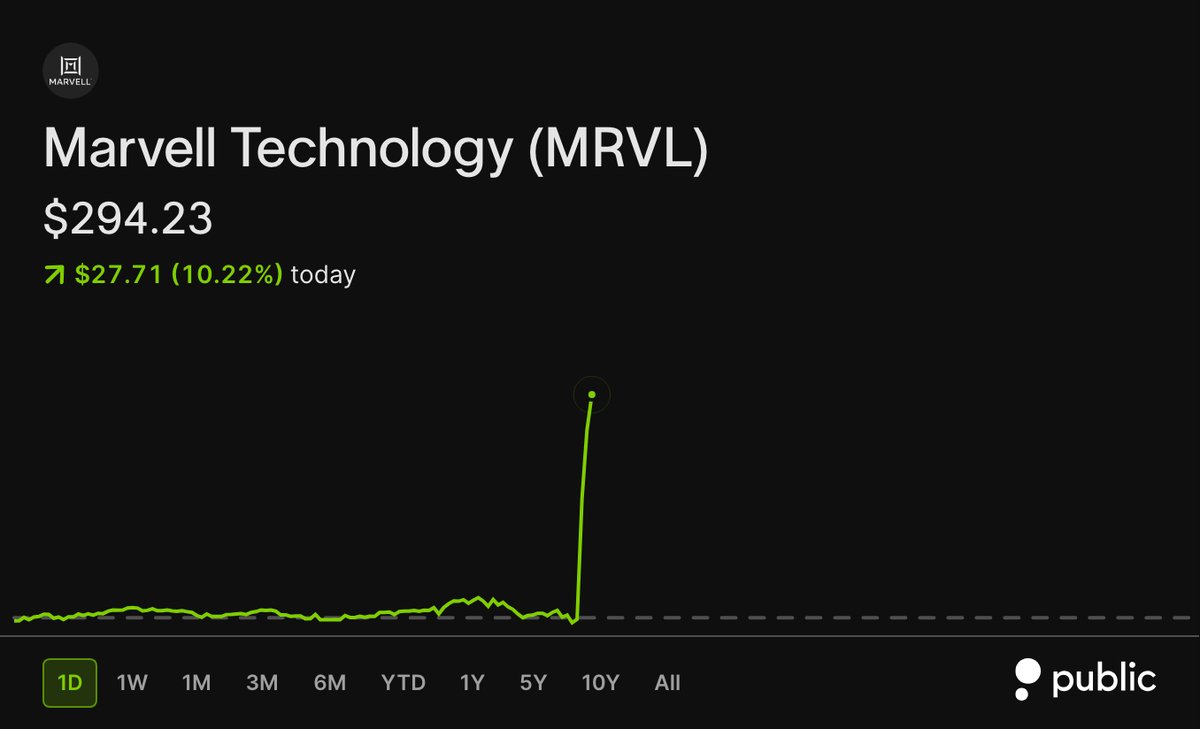
Marvell CEO Matt Murphy said at Investor Day that the company now expects about $20 billion in total FY28 revenue, up from $18 billion previously. The company also raised its FY31 revenue view to $70 billion-$90 billion and said the AI market it can address could reach about $400 billion by 2030.
The new guidance marks a clear step up in Marvell’s view of its AI opportunity. In the X posts, the company’s 2030 AI market estimate was framed as more than four times the $94 billion opportunity it had projected for 2028.
Shares of MRVL were cited as trading nearly 10% higher in premarket action. The signal also ties Marvell’s business to both custom-chip demand and GPU-heavy spending, naming GOOGL, AMZN and NVDA as part of that broader AI buildout.
The material available here includes management’s comments and reposted wires, with no counterstatement from other parties. The immediate news is the higher revenue path and the larger market-size view Marvell is now putting in front of investors.
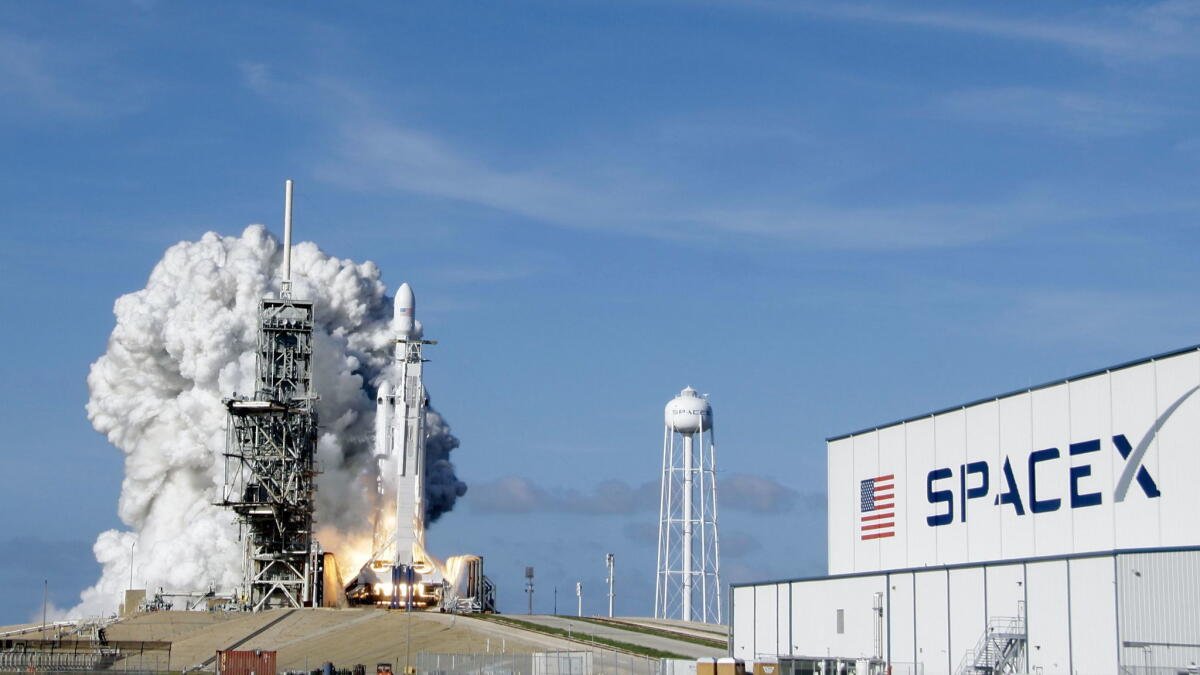
SpaceX is seeking Florida approval for a 32.4-mile, 16-inch natural gas pipeline in Brevard County to support Starship launches from Cape Canaveral. Reuters and Bloomberg both reported that the project was filed by a SpaceX subsidiary, Coastal Connect Services, and would tie into the Florida Gas Transmission network.
The filing dates back to a September regulatory submission and reflects SpaceX’s effort to reduce reliance on trucked LNG deliveries. Starship’s Raptor engines run on liquid methane and liquid oxygen, so a more dedicated gas supply chain would support higher launch cadence plans at the Cape.
For investors and the launch industry, the move underscores how SpaceX is building out infrastructure around its Florida operations, not just spacecraft. It also adds another data point to the broader commercialization of launch services, where fuel logistics and launch-site capacity increasingly matter.
SpaceX has not publicly commented on Reuters’ request for comment. Florida City Gas has objected to the proposal, while PSC staff reportedly recommended approval and a vote had been scheduled for October 6, though the project remains subject to regulatory review.
How this story unfolded
2026-08-093 posts · 3 authors
Raymond James projects SpaceX could reach $5T annual revenue within a decade, Starship Flight 14 is targeted for late August, and the stock dropped 13.6% in one session after an AI revenue beat.
Company
Boeing wins seven-year PAC-3 MSE seeker contract
Lockheed Martin awarded the roughly $14.7 billion deal, which formalizes a framework to triple seeker output
Boeing said it has secured a seven-year contract to accelerate PAC-3 MSE seeker production. The award was made by Lockheed Martin and is valued at about $14.7 billion.
The deal is about expanding output in a missile supply chain, not a one-off delivery order. PR Newswire said the framework formalizes a plan to triple PAC-3 MSE seeker production and supports the Pentagon’s Acquisition Transformation Strategy.
For investors, the announcement adds visibility to Boeing’s defense backlog and ties the company to a larger production ramp in missile components. Reuters separately reported the contract is worth up to $14.7 billion, reinforcing the scale of the award.
No denial from the companies was included in the source material. Both the X signal and the newsroom reports point to the same event: Boeing’s seven-year PAC-3 MSE seeker contract.
U.S. Treasury yields pulled back on Tuesday, with the 10-year easing to 5.27% and the 30-year to 5.63% after the long end had recently hit multi-decade highs. The move followed a drop in oil prices below $100 a barrel, which helped relieve some pressure on bonds.
The backdrop is a months-long repricing in government debt markets, driven by concerns over large fiscal deficits, sticky inflation and rising borrowing supply. Reuters and CNBC both reported earlier that the 10-year yield had climbed to 5.3338%, its highest since April 2002, while the 30-year reached 5.6702%, the highest since July 2002.
The retreat matters for bond-heavy products such as IEF and IEI, which track intermediate-maturity Treasury exposure and tend to move with changes in yields. It also feeds into the pricing of mortgages, auto loans and other rates linked to Treasury benchmarks.
Treasury Secretary Scott Bessent’s remarks gave the move a policy angle, saying stronger growth and spending restraint could improve the U.S. debt trajectory. For now, though, the pullback looks more like a pause after a rapid selloff than a full reversal of the broader bond-market trend.
How this story unfolded
Earnings
Strategy returns to profit with about $21 billion Q3 bitcoin gain
Bitcoin rebound lifts paper gains, while fresh buys and preferred-stock buybacks continue
Strategy posted an estimated $21 billion unrealized gain on bitcoin in the third quarter, returning to profitability for the first time in four quarters. The X signal also says the company bought another 334 bitcoin last week for about $28.7 million.
The update extends a story investors have been following closely: how Strategy’s earnings and capital moves track the value of its bitcoin holdings. Recent coverage in the site’s news library had already highlighted the firm’s liquidity buffer and its large bitcoin position.
For MSTR, the quarter’s profit reflects a valuation swing rather than an operational turnaround. The company also spent $176.3 million repurchasing STRC preferred stock, underscoring that capital allocation remains centered on its financing structure.
One cited commentator argued that Strategy’s preferred-stock funding machine is becoming harder to use, but that is an opinion, not a confirmed company statement. The reported buyback and bitcoin purchase together show the firm is still active on both fronts.
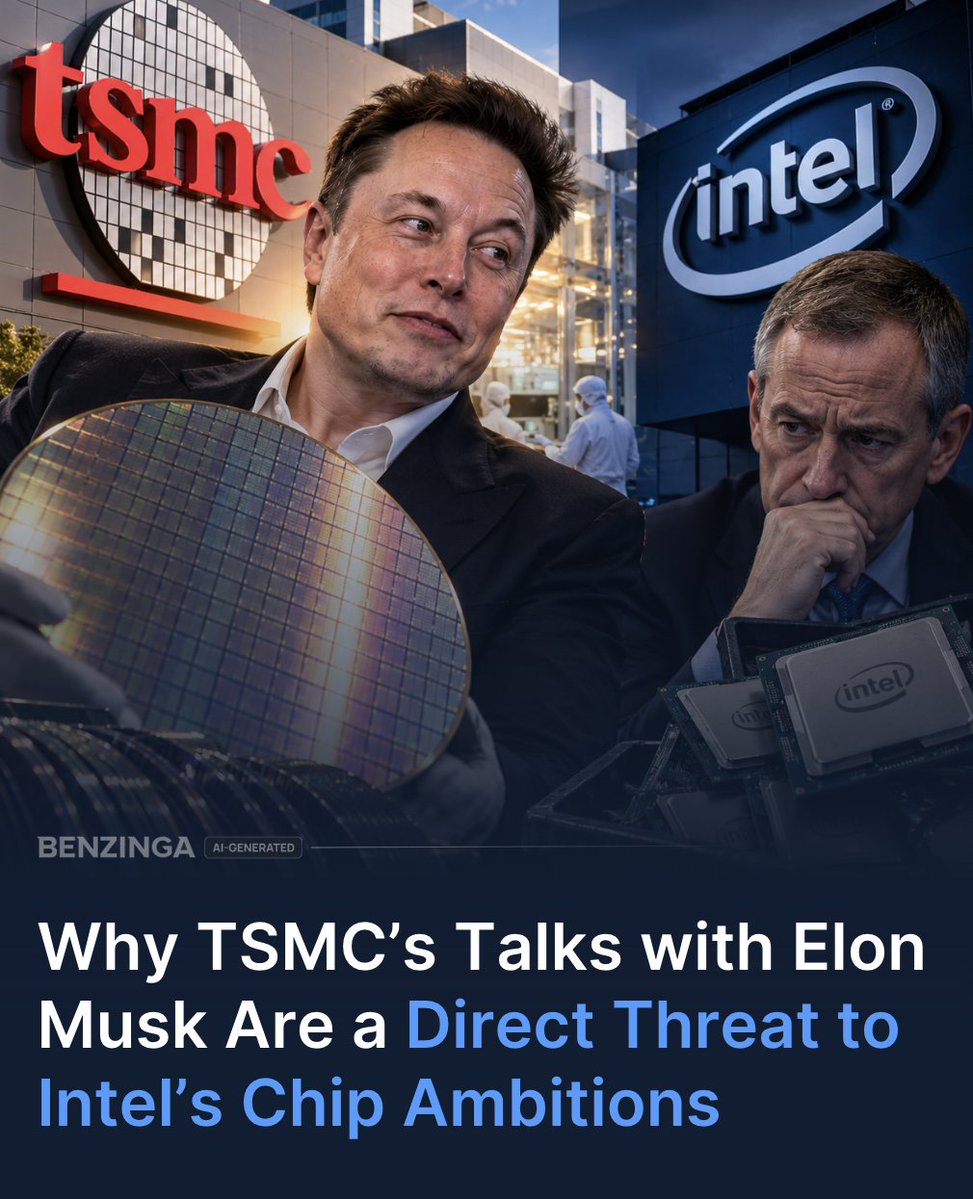
Elon Musk said Taiwan Semiconductor Manufacturing is discussing a possible chipmaking partnership for his Texas-based “Terafab” project. Teslarati reported that Musk framed the talks as “just discussions,” without signaling any finalized deal.
This is not the first time Terafab has been linked to a chip partner. N5 says Intel joined the project in April, and Musk had previously said Terafab planned to use Intel’s 14A process.
If TSMC does move further into the discussion, the project could have a broader supplier setup and create additional competitive pressure for Intel. For TSMC, the talks would potentially widen its reach into Tesla, SpaceX and xAI-related manufacturing.
No formal agreement details have been disclosed so far, so the latest update remains Musk’s public confirmation that talks are underway. N2 also shows Intel announcing a separate manufacturing collaboration with Applied Materials today, underscoring the company’s continuing push in chipmaking innovation.
Morgan Stanley analyst Adam Jonas has reiterated an Overweight rating on SpaceX and kept a $300 price target, describing the stock as “cheap and getting cheaper.” Reports cited by the market showed SpaceX shares firming on October 5 as investors refocused on the company’s Starship testing path and AI ambitions.
The latest call lands against a backdrop of renewed Wall Street attention on SpaceX’s multi-business model. Analysts have been framing the company not just as a launch provider, but as a combination of space transport, satellite connectivity and AI infrastructure optionality.
For markets, the key ticker is SPCX, with sentiment around the name improving after the note. Near-term catalysts being watched include Starship Flight 15, upcoming earnings and execution on AI and cloud contracts, all of which could shape how investors value the stock.
There has been no public response from SpaceX to the new analyst note. The debate remains centered on whether the company’s long-term growth story can justify a premium valuation while profitability is still ahead of the current numbers.
Bitcoin chatter turns to a possible October floor after a $126,000 peak call
A recycled 4chan call and fresh bullish commentary keep traders focused on whether the next big move is a drawdown or just another consolidation phase.
Bitcoin discussion intensified on X today after a recycled anonymous 4chan post was framed as having nailed the market top at about $126,000 on October 6, 2025 and now pointing to a bottom. On the same day, Cointelegraph reported that CZ said he was “always bullish” and described his earlier Bitcoin dip message as a coincidence.
The broader backdrop is a market still full of competing upside calls and risk warnings. Posts cited Grayscale’s three-year return comparison, VanEck’s research case for a $500,000 Bitcoin price, and prediction-market odds from Kalshi and Polymarket, underscoring how quickly sentiment can swing around a high-volatility asset.
For listed names, the impact is mainly through sentiment and trading activity rather than a company-specific event. Coinbase is the obvious equity to watch if Bitcoin volatility lifts crypto volumes, but today’s new development is the narrative shift itself, not a fresh filing, earnings report or regulatory action.
I could not verify the 4chan claim independently from a primary source; it remains an X-driven narrative. The only fresh corroborated item in the search results is Cointelegraph’s report on CZ’s comments and the continuing stream of bullish Bitcoin research and prediction-market coverage.
Lucid said third-quarter deliveries reached 3,806 vehicles, while production fell to 2,954 units. That leaves deliveries 852 vehicles above output, as the company works to reduce inventory and better match near-term demand.
The update extends Lucid’s broader operating reset and cost-control effort. PR Newswire said the company disclosed the production and delivery figures alongside the date for its third-quarter 2026 earnings call.
The numbers matter most for LCID, where investors are watching whether lower output can translate into cleaner inventory management. Multiple reports framed the move as a deliberate production pullback rather than a sign of lost demand.
No additional company commentary was included in the provided materials beyond the explanation that production is being aligned with demand. The focus now stays on delivery cadence and inventory trends.
Uber has agreed to acquire ezCater in an all-cash deal valued at $2.3 billion. Multiple reports say ezCater works with more than 140,000 restaurant partners and has generated over $2.5 billion in trailing 12-month gross bookings.
The acquisition extends Uber Eats further into workplace meals and corporate catering. The reported average order size above $400 suggests a business mix that differs from standard restaurant delivery.
The main stock tied to the news is UBER. Investors will likely focus on whether the deal strengthens Uber Eats’ enterprise revenue mix and improves margins, as some reports indicated.
No additional statement from the parties was included in the provided materials beyond the deal details and business metrics.
Micron and Netlist have reached a patent license and settlement agreement worth a total of $600 million. Under the deal, Micron will pay Netlist $30 million per quarter from Q4 2026 through Q3 2031.
The dispute centers on memory-chip patents, including high-bandwidth memory technology. The agreement also says all pending legal proceedings between the two companies will be settled and released.
For investors, the key names are MU and NLST. The settlement removes a major litigation overhang and establishes a long payment schedule that the market can now model.
Reuters also reported the settlement on Oct. 6, corroborating the $600 million figure and the underlying patent dispute. No additional company comment was included in the provided material.
Energy Transfer said it will acquire Vaquero Midstream in a transaction valued at about $2.63 billion. The deal consists of $1.95 billion in cash and roughly 33.3 million newly issued Energy Transfer common units.
The purchase adds gas gathering and processing infrastructure in the Delaware Basin, according to the reports. The X signal also cites about 300 miles of pipelines and 675 MMcf/d of processing capacity.
For ET, the transaction is a direct corporate development because it expands the company’s midstream footprint. Investors will likely focus on the cash component and the dilution effect from the newly issued units.
The deal is expected to close in the fourth quarter of 2026.
Nike drew fresh attention on X after Berenberg downgraded the stock to Sell from Neutral and cut its price target to $27.50 from $49.00. In a separate move, DA Davidson upgraded Nike to Buy/Add from Neutral while lowering its target to $39 from $46.
The backdrop is Nike's recent first-quarter FY2027 report, where earnings per share beat estimates but revenue missed. The company also announced a restructuring plan, which is part of the broader debate around how quickly fundamentals can stabilize.
The market reaction centers on Nike shares, with the new broker actions reinforcing a split view on valuation and execution. Lululemon appeared in comparison posts on X, but the company is not part of the same event chain in the supplied materials.
According to the analyst view cited in the X post, sportswear share loss and revenue pressure could persist through FY28, with limited help from restructuring until FY29. That is the key incremental detail in today's signal.
Cerebras shares moved higher after OpenAI CEO Sam Altman called the chipmaker a “close partner” on X. Multiple market feeds said CBRS was up roughly 8% to 9% intraday.
The message extends a running market theme around the relationship between OpenAI and Cerebras. Recent coverage in the site’s news archive shows Altman’s comments have already been treated as a meaningful signal for the stock.
The main ticker in focus is Cerebras Systems, NASDAQ: CBRS. The move appears tied to Altman’s public endorsement rather than to a fresh earnings release or new commercial announcement.
No additional deal terms or order details were included in the material. For now, the latest catalyst is the renewed public framing of Cerebras as a key OpenAI partner.
Applied Materials said on Oct. 6 that it is expanding its R&D partnership with Intel to accelerate chipmaking innovations for AI computing. The work will focus on next-generation transistors, interconnects and advanced packaging, and will be carried out across Applied’s EPIC Center in Silicon Valley and Intel’s R&D campus in Hillsboro, Oregon.
The announcement builds on a long-running collaboration between the two companies, with Applied saying the EPIC Center is designed to shorten the path from early-stage research to high-volume manufacturing. Intel said it sees the effort as part of a broader push to improve performance, power efficiency and packaging for AI computing.
For investors, the update is most directly relevant to AMAT and INTC because it highlights deeper cooperation in the semiconductor equipment and manufacturing stack. Applied also said the collaboration includes advanced packaging work for Foveros-based 3D stacking, underscoring the importance of interconnect density, power delivery and thermal performance for high-performance compute systems.
The announcement was published by Applied Materials and echoed by multiple market-news outlets on the same day. No public denial of the collaboration was identified in the materials reviewed.
CrowdStrike, AWS and NVIDIA said they are expanding their global cybersecurity startup accelerator for startups building in the agentic era. Multiple X posts say the 2027 program will select 35 participants.
The accelerator gives early access to emerging security teams and keeps the three companies close to the next wave of AI-driven security workflows. In our news database, recent NVIDIA coverage has centered on AI demand and expansion, while CrowdStrike remains a closely watched cybersecurity name.
For the market, the update ties CRWD, NVDA and AMZN to the same startup ecosystem effort, blending cybersecurity, cloud infrastructure and AI compute support. One post also said alumni have raised more than $730 million, underscoring the program’s role as a deal-flow and incubation channel.
No funding size or financial guidance was disclosed in the signals. The posts frame the move as a broader push to support agentic AI security companies rather than a product launch or earnings event.
Nokia CEO says AI data centers are still supply-constrained
Hotard said chip and power shortages could be the difference between current buildout and a much faster pace, keeping attention on Nokia’s AI networking demand.
Nokia CEO Justin Hotard said AI data-center construction is still being held back by supply constraints. Speaking on CNBC, he said customers would probably build twice as fast if they could, and added that the industry cannot be described as overbuilding today.
Hotard pointed to memory-chip shortages and energy as the main bottlenecks. He also argued that even without a new frontier model over the next three years, companies could continue making substantial progress by deploying the AI systems already available.
For Nokia, the remarks reinforce its role in the AI infrastructure stack, particularly in optical and IP networking equipment used to link data-center racks and connect sites across regions. Investors often read that through the lens of order visibility for NOK’s AI and cloud networking businesses.
The CNBC interview is the direct source for the new comments, while Nokia’s broader message has been that demand remains strong but supply is the binding constraint. No new revenue or shipment figures were disclosed in the latest remarks.
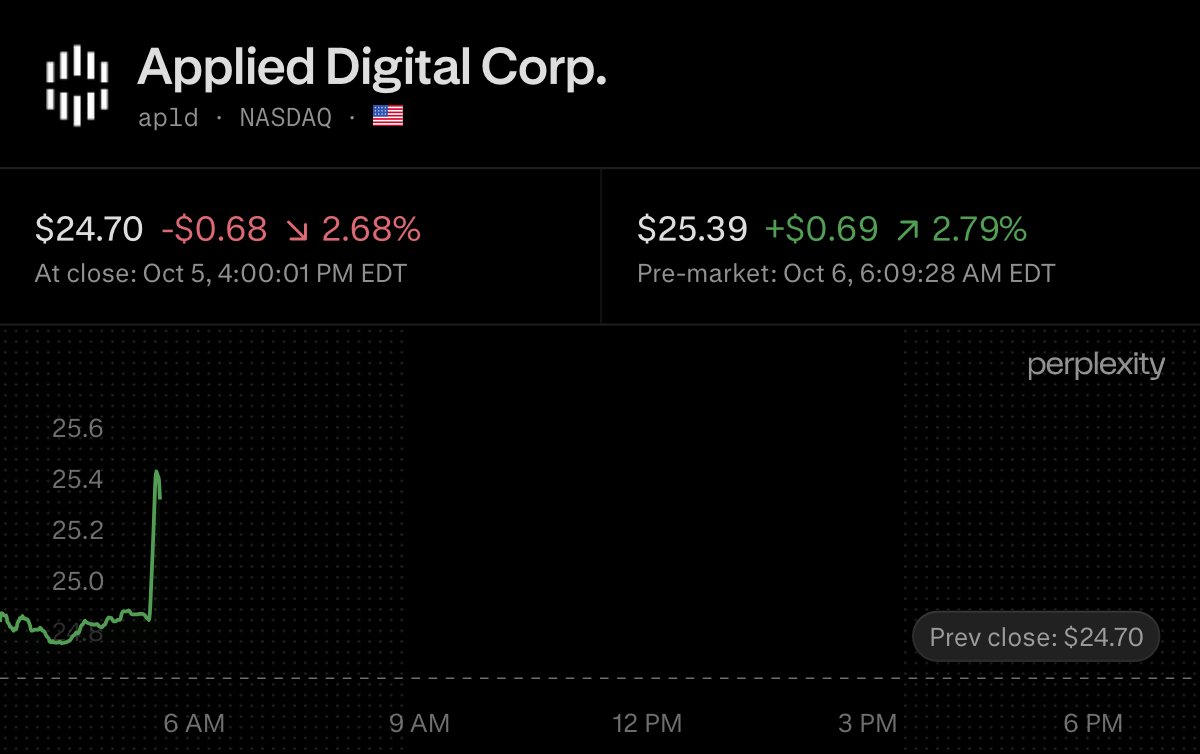
Applied Digital said it has secured access to up to 1 GW of potential power capacity in Finland for a planned AI data center campus. The company framed the site as its first international development and its first development opportunity outside the United States.
The new disclosure matches a GlobeNewswire item in the local news library, which says the agreement gives Applied Digital a strategic foothold in an emerging European AI market. It also comes as the company continues to execute its U.S. development pipeline.
APLD was up 2.6% premarket in the related wire report. Separate library coverage from the prior day noted that Polaris Forge 1 added 75 MW of critical IT load, underscoring the company’s ongoing domestic buildout.
Applied Digital said initial power in Finland is expected in 2028 and that it is already in talks with major hyperscale customers. The update is about potential capacity and project planning, not near-term operating supply.
Reflection AI has launched Beam, a 501-billion-parameter open-weight model built for coding, reasoning, and agentic workloads. The company says Beam can match GLM-5.2 while using roughly one-quarter of the inference compute.
The release matters because it combines frontier-scale parameters with a lower-cost positioning aimed at enterprise and developer use cases. Beam is described as a text-only mixture-of-experts model, and coverage frames it as a challenger to leading open-weight systems from both the U.S. and China.
For markets, the immediate read-through is to AI infrastructure demand, especially Nvidia’s high-end GPU story. Social posts around the launch also cite 10,500 NVDA GB300s for reinforcement learning and 6,144 for pretraining, but those figures are still coming from X reposts and should be treated as unconfirmed until company-level disclosure appears.
What is confirmed for now is the launch itself, which has been reported by multiple outlets. Whether Beam’s efficiency claims hold up in independent testing will depend on benchmarks, customer trials, and follow-up disclosures.
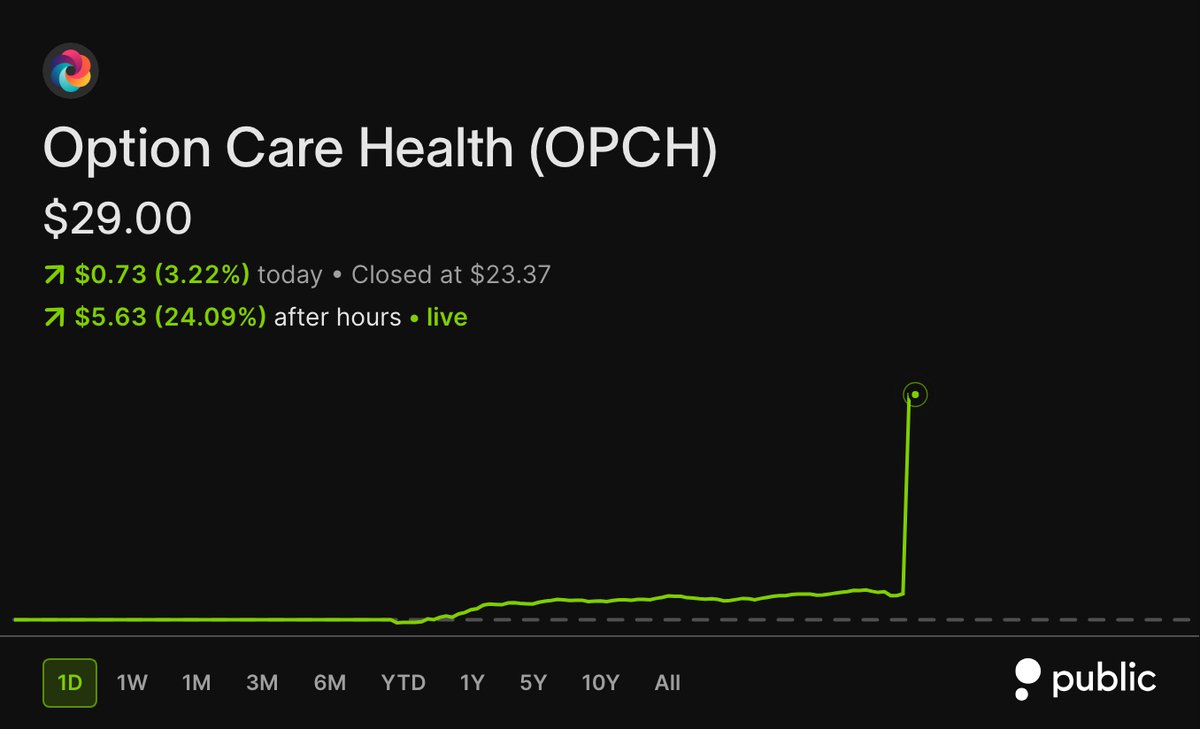
CD&R, McKesson and Option Care Health said they have signed a definitive agreement under which the investor group will acquire Option Care Health for $32.05 per share, implying an enterprise value of about $5.8 billion. After closing, CD&R will own roughly 51% and McKesson about 49%.
The announcement confirms the deal that had been widely reported a day earlier as nearing completion. Option Care said it will remain a separate company led by its own management team, and its common stock will be delisted from Nasdaq once the transaction closes.
The news puts OPCH squarely in focus, while MCK becomes the strategic buyer with a minority stake. McKesson said it expects to account for the investment under the equity method after closing.
The companies expect the transaction to close in the first half of 2027, subject to stockholder and regulatory approvals. Option Care also withdrew prior guidance and will not hold a live earnings call for its third-quarter results.
Ariel Investments is pressing Mattel to consider a sale. According to the WSJ report included in the source set, Ariel holds a 5.4% stake in Mattel and says the toymaker’s shares are “significantly undervalued.”
The push comes against a backdrop of softer performance at Mattel. CNBC says the company has struggled with declining sales and profitability in recent years, while the WSJ follow-up says Ariel believes the public-company structure is leaving value on the table.
The immediate market reference is MAT. The X signal showed the stock up 0.1% premarket, suggesting investors are reassessing whether a strategic review could become a live catalyst.
For now, the public pressure is coming from Ariel and media reports. The materials provided do not include a fresh statement from Mattel, though WSJ reporting referenced contacts by Authentic Brands Group in the broader story line.
Brazilian stocks rallied sharply today, with X posts saying the market was up 14% and logging its best day since March 2020. Several posts tied the move to the first round of Brazil’s election.
Our newsroom has been tracking the same event since Oct. 5, when reports said Flávio Bolsonaro unexpectedly took the lead over Luiz Inácio Lula da Silva in the first round, making him the favorite heading into the runoff. CNBC also reported that Brazilian stocks jumped as Bolsonaro was seen as the heavy favorite to win the presidency.
The move spilled into Brazil-linked ETFs. EWZ was cited in posts and in our coverage as surging, while ILF was also mentioned as moving higher alongside it.
Some commentary framed the rally as a valuation repricing as much as an election trade. One post said Brazil was the world’s second-cheapest stock market at the end of Q3, and Seeking Alpha noted EWZ was valued at 8.7x P/E.
Bloomberg reported today that Seagate and Toshiba are competing for TDK’s hard-disk drive magnetic-head business, in a deal said to be worth several billion dollars. TDK shares climbed 7.3% after the report surfaced.
The news follows a recent local-market note that Seagate had already been pressured by a Toshiba headline, while its nearline-drive contracts reportedly extend into 2027. That puts the focus on how storage-supply assets and capacity commitments are being revalued across the HDD chain.
The trade involves STX, TTDKY and WDC-linked storage exposure. The posts say TDK supplies Western Digital, while Toshiba relies on the business entirely, making any ownership shift material for the broader HDD component landscape.
No direct comment from the companies is included in the source material. For now, the market move is the clearest immediate signal in the report trail.
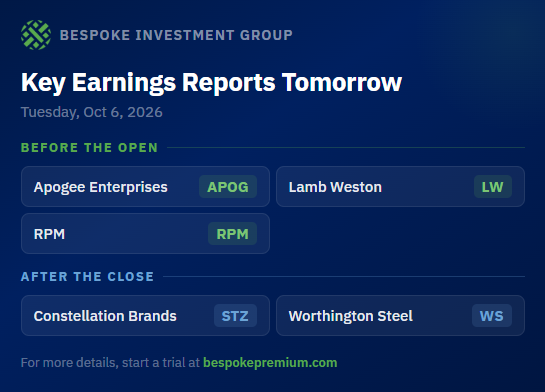
Apogee Enterprises released its quarterly results this morning. The news in the local wire material now turns the scheduled event into a confirmed earnings update, with EPS reported at $1.17 versus the Zacks consensus estimate of $0.59.
That makes the release more than a calendar item. The next focus for investors is whether revenue, margins and guidance back up the earnings beat.
Among the pre-open names on today’s list, Apogee is the one with a clearly quantified result in the company’s latest update. RPM International and Lamb Weston are also on the morning schedule, but no comparable earnings figures are provided in the supplied material.
So far, there is no additional company response or contradiction in the source set. Further detail would need to come from the company’s full release and follow-up coverage.
Multiple data desks reported that U.S. ADP weekly employment change rose to 23,750 in the latest four-week window, up from a prior reading of 20,000. FXStreet cited NER Pulse for the average weekly gain through Sept. 19, while Phoenix News and TechFlow carried the same headline figure.
The weekly measure is a companion indicator to ADP’s national employment report and is used by traders to gauge short-term private-sector hiring trends. It is not the official payrolls release, but it often helps shape expectations ahead of broader labor-market data.
In markets, FXStreet said the dollar index weakened after the release and slipped below 102. Labor data like this can move Treasury yields, gold and rate-sensitive equities because it feeds directly into expectations for Federal Reserve policy.
For now, the public reports point to the same latest figure of 23,750. The prior reading is less consistent across reposts, appearing as either 20,000 or 22,500, so the more formal ADP/NER source would be the cleaner reference if it is later published.
S&P Global said the UK construction PMI climbed to 46.1 in September from 44.3 in August, beating the 44.9 forecast. The index remained below the 50 threshold, so the sector is still contracting, but at the mildest pace since January.
The residential segment remained the weakest part of the survey, while commercial building held up better and civil engineering also eased less sharply. S&P Global economist Tim Moore said subdued new orders, delayed client decisions and higher input costs continued to weigh on activity.
For markets, the print is more about a softer downturn than a genuine turnaround, but it may still shape views on UK growth momentum and policy sensitivity. It is likely to matter most for UK homebuilders, construction names and materials suppliers rather than broad equities.
Elsewhere in Europe, construction PMIs also stayed in contraction territory, including Germany at 43.5, France at 39.8 and Italy at 46.5. That leaves the UK’s improvement looking relative, not decisive, against a still-weak regional backdrop.
Westpac–Melbourne Institute’s October consumer sentiment index fell 4.7% to 80.4 from 84.4 in September. The survey ran from September 28 to October 1, and respondents interviewed after the Reserve Bank of Australia’s rate decision recorded a much weaker 67.2 reading.
Westpac said the drop was broad-based, with family finances, big-ticket purchase intentions and rate expectations all deteriorating. More than 80% of respondents surveyed after the RBA decision expected mortgage rates to rise over the next 12 months.
The data adds to evidence that higher borrowing costs and fuel prices are weighing on Australian households. Westpac said consumers remain focused on cost-of-living pressures, while housing-related sentiment remains subdued.
For markets, the report is a reminder that household demand may stay under pressure if borrowing costs remain elevated. The bank also highlighted the sharp divergence between pre- and post-RBA responses as the clearest sign of the policy shock.
France output falls 0.3% in August as Spain’s industrial growth cools to 1.5%
French manufacturing improved, but energy weakness kept industrial production in negative territory; both releases missed expectations and point to a softer euro area factory backdrop.
France’s industrial production fell 0.3% month on month in August, after a revised 0.6% drop in July. Manufacturing output rose 0.3% on the month, while industrial production still increased just 0.3% year on year.
The French decline was driven mainly by a 2.4% drop in extractive industries, energy and water, with lower electricity production doing much of the damage. Spain also reported softer momentum, with industrial production rising 1.5% year on year in August, down from a revised 2.5% in July, and falling 0.7% on the month.
For markets, the data reinforce a cautious read-through for euro area industrial demand, including autos, capital goods and energy-intensive manufacturing. The releases themselves are macro prints rather than company-specific events, so the impact is mostly on sector sentiment and rate expectations.
Both countries’ August figures came in below forecasts, suggesting that the euro area’s manufacturing recovery remains uneven. The French series showed a split between firmer manufacturing and weaker utilities and energy, while Spain’s annual growth cooled even as it stayed positive.
India’s HSBC services PMI final reading for September came in at 55.2, down from 54.1 in August and below the flash estimate of 55.8. The composite PMI finalized at 55.9, compared with 54.3 a month earlier and a flash reading of 56.5, keeping private-sector activity in expansion territory.
Reuters coverage said September’s services strength was driven by financial, consumer and digital demand, but the July-September average was the weakest since early 2022. The survey also showed new business growth quickening, while export order growth slowed to its weakest in nearly three years and hiring eased.
For markets, the PMI print is a timely read on India’s domestic momentum and corporate demand conditions. The gap between flash and final readings was modest, but the still-solid composite level suggests manufacturing and services together continued to support growth in September, even as softer exports and employment temper the tone.
The HSBC survey is compiled by S&P Global from responses from around 400 service-sector companies. A reading above 50 indicates expansion, and the latest data point to continued domestic demand resilience even as external demand softened.
Zeta Global said it has entered into a definitive agreement to acquire Senso, an AI engineering company. Senso’s technology helps power Zeta’s Generative Engine Optimization offering and connects enterprise data with frontier AI platforms including ChatGPT, Gemini, Claude and Google AI Overviews.
The move comes as brand discovery is increasingly shifting into AI-generated answers rather than traditional search results. The reporting around the deal frames Senso as a way for Zeta to bring that connectivity and engineering capability in-house.
The transaction is relevant for ZETA shares because Zeta Global is the acquirer and the operating platform behind the announcement. Separate market coverage in the news database also notes that Zeta Global hit a 52-week high on October 5, keeping investor attention on the stock.
No deal value or other financial terms were included in the available materials. The reports consistently describe Senso as a Y Combinator-backed AI company and emphasize the addition of technology and engineering talent to Zeta’s product stack.
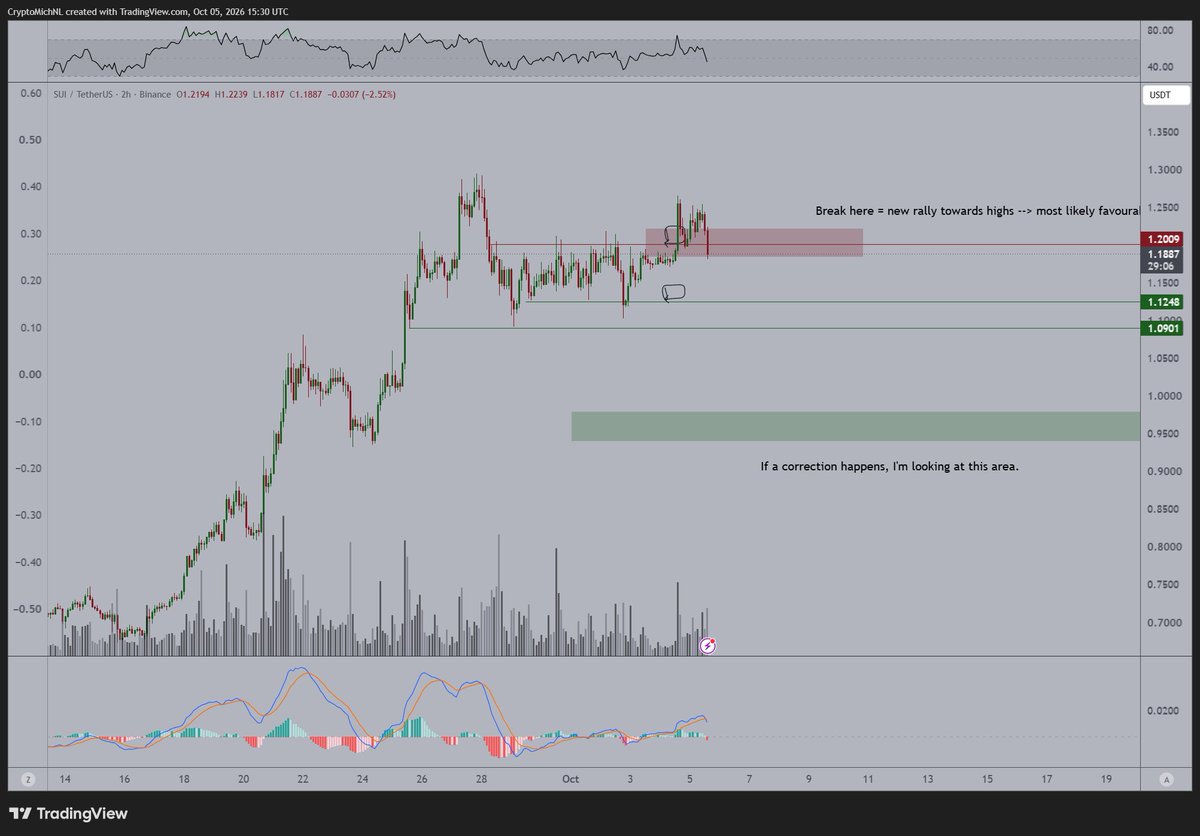
CryptoMichNL said on X that SUI is “breaking back into its range,” which means there is still no clear breakout and the market needs more patience. The message aligns with recent price action showing SUI trapped in a narrow near-term band rather than trending cleanly in one direction.
Outside reporting puts SUI around $1.18 to $1.19 on Oct. 6, with the token still above its 50-day and 200-day moving averages. Coverage also notes that derivatives activity has remained elevated, with CoinGlass open interest approaching $1 billion as attention builds around Basecamp 2026.
For traders, the focus is on confirmation rather than anticipation: a sustained move above the nearby range would strengthen the setup, while failure to hold the lower end would keep the token locked in consolidation. The move matters most for SUI itself, but it also feeds sentiment across high-beta layer-1 names.
There has been no company-style response to this market readout; it is primarily a technical assessment from traders and chart watchers. The next catalyst will likely come from price confirmation or a fresh ecosystem headline rather than from the current range action alone.
SpaceX officially announced Starbase, Louisiana, a high-cadence launch site for Starship missions.
2026-09-2886 posts · 45 authors
Starship Flight 14 launched on Sept 28, performing its first orbital insertion burn and entering Earth orbit.
2026-09-2943 posts · 26 authors
Starship Flight 14 splashed down successfully, completing its first orbital flight, despite one Raptor vacuum engine shutting down early; it carried an estimated 52 tonnes to orbit.
2026-10-054 posts · 3 authors
Morgan Stanley reiterated an Overweight rating on SpaceX with a $300 price target, calling the stock 'cheap and getting cheaper' and noting low client ownership.
2026-10-0614 posts · 12 authors
SpaceX proposed a 32-mile natural gas pipeline in Florida for Starship fuel, and Cathie Wood said Falcon 9's phaseout could benefit Rocket Lab.