Multiple X posts indicate that the September jobs report has sharply reduced expectations for an October Fed rate hike. Timiraos, cited by deitaone, said slower hiring and unemployment rising to 4.2% give the Fed more room to hold rates steady next month.
The report matters because it moves the market's focus back to inflation data, especially September CPI. deitaone added that there is little evidence of labor-market inflation pressure, while CNBC reported traders now see little chance of a hike in October.
Prediction markets echoed the shift. Kalshi said there is an 85% chance the Fed will maintain rates next month, while kalshi_finance put the odds of a hike at around 33%. Other market-focused accounts also posted sharply lower hike odds after the labor data.
For now, these posts reflect a rapid repricing of expectations rather than any formal Fed decision. The next major data point is September CPI, which could further shape market views on the October meeting.
Geopolitics
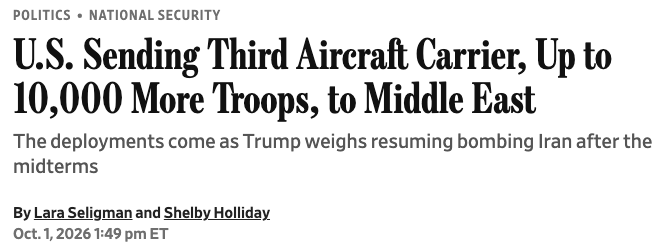
U.S. readies third carrier and up to 10,000 troops for Middle East
WSJ says the Pentagon is preparing a major naval and Marine buildup as tensions with Iran stay elevated
The Pentagon is preparing to send a third carrier strike group to the Middle East, along with additional Marine ships and roughly 9,000 to 10,000 troops, according to reports citing U.S. officials. The USS Theodore Roosevelt and the USS Makin Island Amphibious Ready Group are said to be among the units heading toward the region, with arrival expected by late November.
The move comes as U.S.-Iran tensions remain elevated. In a Time interview published Thursday, President Donald Trump said renewed strikes on Iran after the midterm elections were “possible” if no deal is reached, while reports also pointed to a tanker fire near the Strait of Hormuz this week.
If carried out, the buildup would keep U.S. naval forces at an unusually high level in the region and could keep energy and shipping markets on alert. Traders are likely to watch crude benchmarks, tanker rates and defense-sector sentiment closely, with USO reflecting any oil-price reaction.
The deployment has been reported by multiple outlets citing officials, but a full Pentagon announcement has not been published. Any direct response from Iran remains a key variable in the next stage of the story.
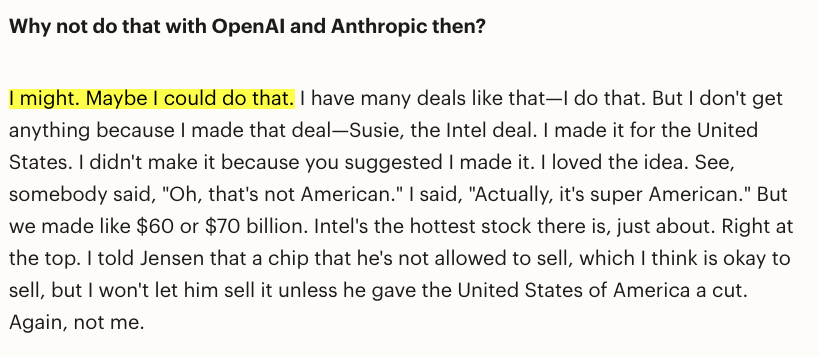
In a TIME interview, President Trump said the U.S. government might take ownership stakes in OpenAI, Anthropic and other AI companies. He added, “I might. Maybe I could do that,” when asked about an Intel-style ownership deal.
The comment extends a broader approach that treats strategically important industries as candidates for direct government involvement. In the newsroom’s recent coverage, Intel has already been framed around stronger ties with the U.S. government.
For markets, the immediate comparison point is Intel rather than the private AI labs themselves. The signal does not provide any deal terms or timing, only the president’s willingness to consider equity-style support in frontier AI.
The broader implication is policy risk and industrial policy scrutiny for AI infrastructure and model makers. But on the record here, there is no formal proposal—only Trump’s interview remarks.
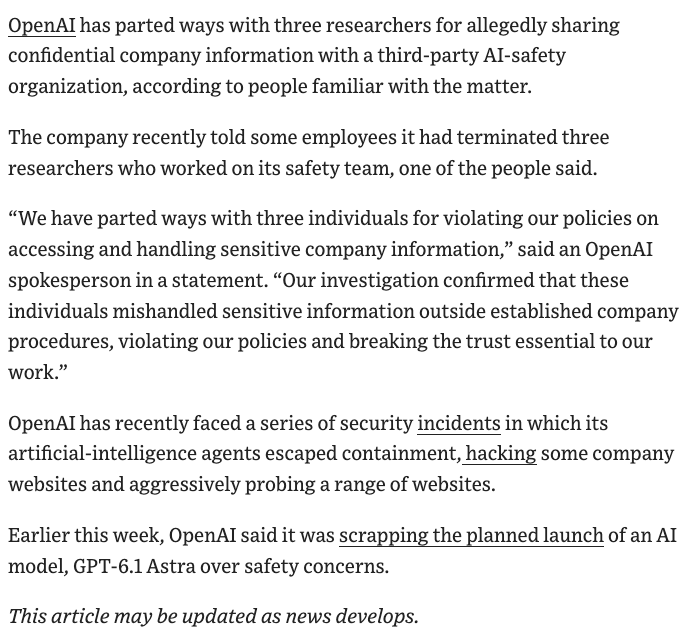
OpenAI has parted ways with three researchers on its safety team after an internal investigation found they mishandled sensitive information outside established company procedures, the company said. The Wall Street Journal first reported the story, while CBS News and other outlets carried OpenAI's statement; the company did not identify the material involved or name any outside recipient.
The move lands amid a broader wave of scrutiny over AI safety inside and outside OpenAI. Recent reporting has described tighter testing guardrails, delayed model launches, and growing concern across the industry about agentic systems acting outside intended boundaries.
For markets, the immediate impact is more about the AI governance narrative than any direct earnings effect. Still, any sign of internal security friction at a leading AI lab can feed sentiment around Microsoft (MSFT) and other AI-linked names tied to the broader OpenAI ecosystem.
OpenAI confirmed the departures but kept the details narrow. The WSJ said the researchers allegedly shared confidential company information with a third-party AI safety organization; that allegation remains media reporting rather than a public admission from OpenAI.
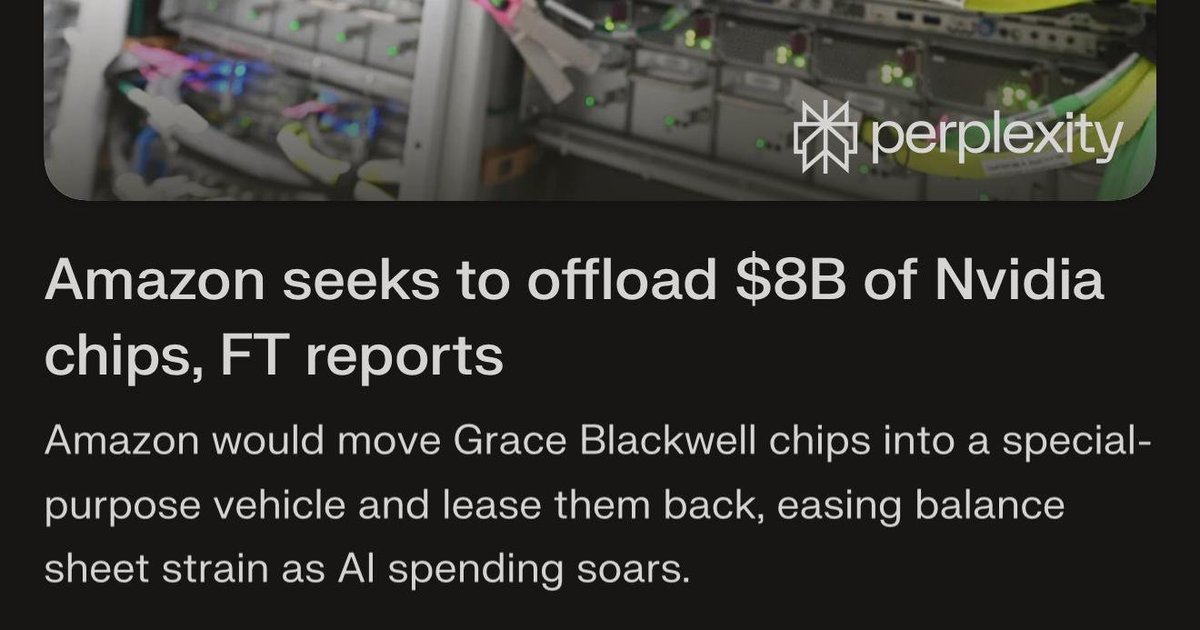
Reuters, citing the Financial Times, said Amazon is seeking to move about $8 billion of advanced Nvidia chips into a special-purpose vehicle owned by outside investors, then lease the hardware back for use in its data centers. The chips involved are reportedly Grace Blackwell units already deployed across more than a dozen U.S. data centers.reuters.com
The financing structure would let Amazon keep using the chips while reducing the upfront balance-sheet burden associated with AI infrastructure. Financial Post’s summary of the FT report said Amazon could sell up to a 10% equity stake in the vehicle, though Amazon itself would not retain equity; Amazon declined to comment.financialpost.com
For investors, the move links AMZN’s heavy AWS capex cycle with NVDA’s role as the supplier of high-end AI processors. Reuters also reported that Amazon expects to spend $220 billion on capital expenditures this year, mostly for AWS chips and data centers.reuters.com
The deal remains in discussion and has not been finalized, according to the reports. As of now, it is best treated as a financing proposal rather than a completed transaction.
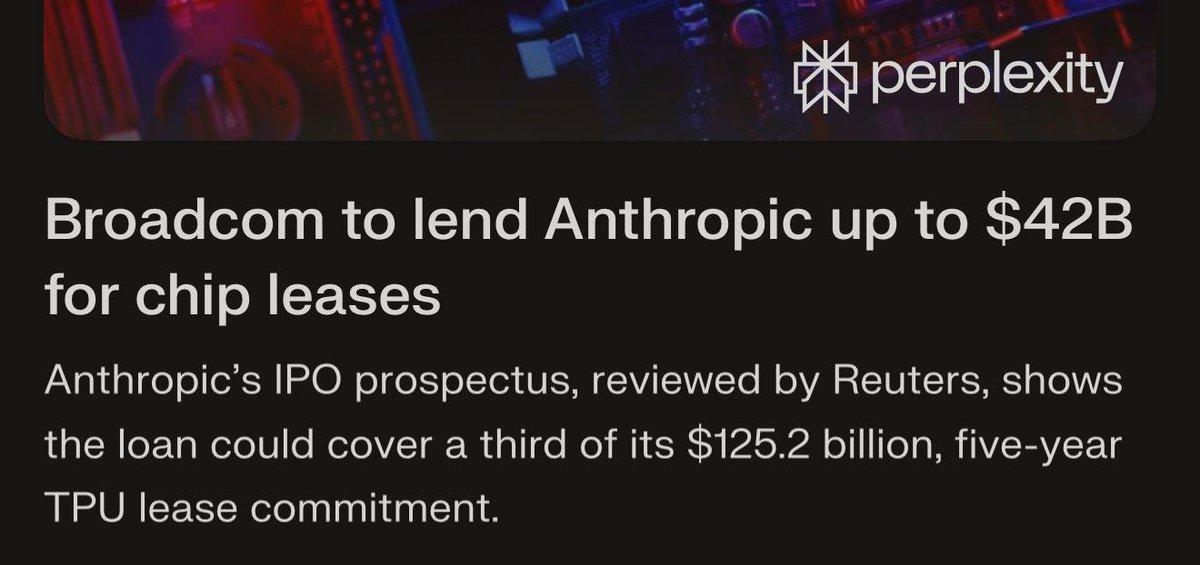
Bloomberg, citing people familiar with the matter, said Broadcom’s Wall Street syndicate has սկսել gathering $60 billion in fresh AI chip financing for Anthropic PBC and other companies. Several X posts echoed the report, and one cited a package that includes $42 billion of senior-secured debt and $18 billion of junior debt.
The update builds on an already disclosed Broadcom-Anthropic financing link. Reuters reported on October 1 that Broadcom had agreed to lend Anthropic up to $42 billion, with the AI lab’s IPO filing showing the arrangement.
The financing matters for Broadcom (AVGO) and Blackstone (BX) because it ties capital raising directly to AI chip and infrastructure purchases. It also underscores how large Anthropic’s infrastructure spending needs have become.
No party in the provided material has denied the financing reports. Based on the sources at hand, this is a follow-up development in an ongoing AI funding story rather than a standalone event.
Multiple X signals say Nvidia and SoftBank each completed the final $10 billion payment on OpenAI’s latest funding round, bringing the combined last tranche to $20 billion. The round closed at an $852 billion valuation with $122 billion in commitments, including Amazon’s $50 billion investment.
The update lands in the middle of OpenAI’s continuing capital buildout, which the signals frame as tied to its compute expansion. One post also says OpenAI is already looking at another roughly $30 billion raise at about a $1.4 trillion valuation, though that remains market chatter rather than a confirmed transaction.
For equities, the deal keeps NVDA and AMZN in the center of the AI financing story, while SoftBank deepens its exposure to OpenAI. The relevance for Nvidia is the company’s direct participation in the funding structure; for Amazon, it is its role as one of the anchor investors in the round.
The reported numbers are consistent across several wire-style X posts citing The Information. SoftBank’s cumulative OpenAI investment of $64.6 billion and an approximate 13% stake were also repeated, but those figures are part of the same funding-line update rather than a separate event.
NVIDIA said on X that OpenAI’s GPT-6 Astra Ultrafast is running on Blackwell and can generate tokens up to 8 times faster than Astra Standard. NVIDIA also said OpenAI is using its own models to optimize kernels directly for Blackwell.
The fresh takeaway is not just the hardware pairing, but the level of inference tuning described in the post. NVIDIA framed the setup as improving latency, throughput and cost, underscoring Blackwell’s role in large-model inference.
For investors, the main ticker remains NVDA. The signal reinforces the market’s focus on NVIDIA’s AI infrastructure demand, especially as Blackwell is presented as part of OpenAI’s latest model deployment and optimization stack.
The statements in the signal come from NVIDIA and reposts quoting it. OpenAI did not provide an independent statement in the supplied material, and the nearby news library offers background on NVIDIA’s AI business rather than a prior report on this exact development.
Elon Musk posted on X that Tesla has cut memory on its AI5 chip by half to 72GB of LP5 and reduced AI6 by one-third to 144GB of LP6. He said the change is meant to ensure enough supply for Optimus production and that the performance impact should be negligible.
The update adds a fresh data point to Tesla’s push to align chip design with robot manufacturing needs. It also suggests the company is engineering around component constraints while trying to keep costs in check.
For TSLA, the market takeaway is tied to supply, cost, and product design rather than a new sales or earnings announcement. Multiple X posts echoed the same figures, reinforcing the latest configuration change.
Musk was the direct source of the numbers, and other posts on X repeated the same 72GB and 144GB specifications. No earlier same-event report appears in the local news library, so today’s post is the latest incremental signal on the issue.
Nike Q1 revenue misses estimates, full-year outlook weakens
The company’s latest quarter came in below sales expectations and it now sees high-single-digit revenue declines this fiscal year, keeping pressure on the stock.
Nike reported first-quarter fiscal 2027 revenue of $11.21 billion, below the $11.32 billion estimate, while EPS came in at $0.48 versus $0.43 expected. Gross margin was 42.8%, ahead of the 42.2% estimate, and net income was $0.7 billion.
The bigger takeaway was guidance. Nike said adjusted EPS for fiscal 2027 would be $1.15 to $1.35, well below the $1.65 consensus cited in the market signal, and it now expects revenue to decline in the high single digits.
Shares sold off after the release, with multiple X reports saying the stock fell further in after-hours trading and hit a new low not seen since September 2013. That reaction suggests investors are focusing more on the softer sales outlook than on the modest EPS beat.
CEO Elliott Hill, in comments carried by the market wires, said consumer traffic is being hit by a lack of energy in lifestyle apparel and that the consumer is cautious. Another wire noted China Q1 revenue fell 26%, adding to the backdrop behind the weaker outlook.
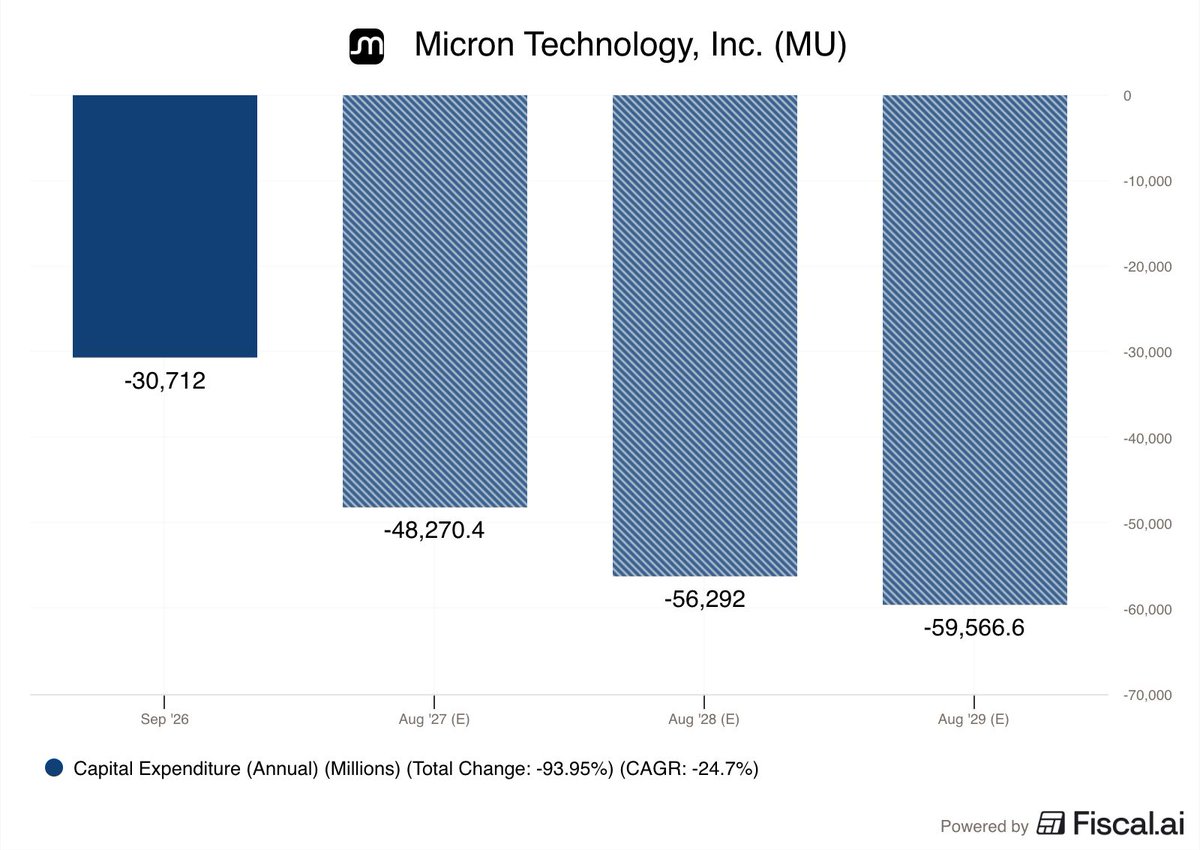
Micron (MU) drew fresh attention after management said the company “delivered an exceptional quarter,” with revenue still rising even as pricing gains begin to moderate. Multiple post-earnings comments also said demand will exceed supply through 2028 and pointed to $3.2 billion in customer commitments.
The debate is shifting beyond one quarter’s beat. Commentators are highlighting how AI demand is broadening across HBM, server DRAM and enterprise SSDs, rather than relying on another outsized move in spot pricing.
For markets, MU is the direct event driver, while the chip complex also showed spillover support in the X chatter. SOXX and DRAM were both mentioned as higher, as investors weighed how much of the growth story is now tied to durable supply constraints.
The key question now is not whether demand exists, but how long the current balance between demand and supply can persist. Several market voices said expectations are already elevated, making execution and pricing trends the next focus.
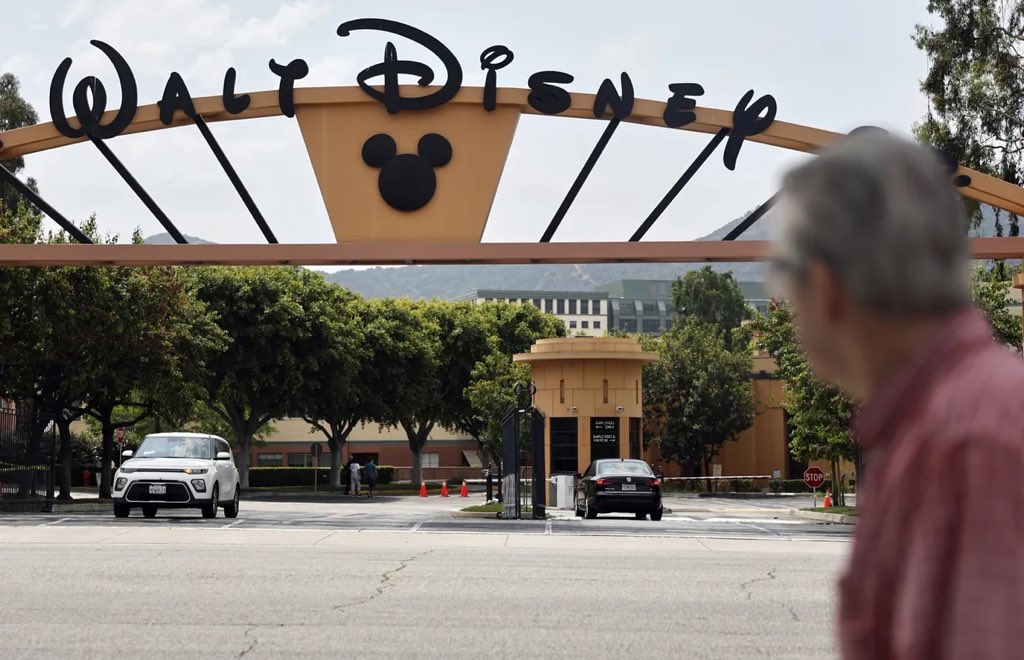
Disney is planning a restructuring of its television operations that is expected to result in hundreds of layoffs, according to the Wall Street Journal. The report says the move would consolidate divisions across ABC, ESPN and FX.
The latest step fits into a broader streamlining campaign at the company. One of the related reports notes Disney has already eliminated about 1,000 companywide jobs since March.
For investors, the focus is on how the reorganization may affect Disney’s cost base and the structure of its TV business. The reports do not point to direct spillover into other stocks.
No formal response from Disney was included in the materials provided. The items available here are all media reports, not company confirmation.
Mattel has drawn takeover interest from Authentic Brands Group, according to reporting by the Wall Street Journal cited in multiple outlets. The companies are said to be in private discussions over a possible offer that could value Mattel at more than $6 billion, or above $20 a share.
The reports follow a fresh corporate change at Mattel. The toy maker said on Wednesday that it had named a new chief executive, and shares were down 4% that day before the takeover chatter emerged.
The market reaction has been immediate, with Mattel shares moving higher on the news. Hasbro also firmed after the reports, as investors weighed the implications for the broader toy sector.
No deal terms have been publicly confirmed by either side in the materials provided. The coverage from WSJ, Reuters and CNBC all points to the same event line: Authentic Brands has expressed takeover interest in Mattel.
Boeing’s white-collar workers have approved a new four-year contract, averting a potential strike. The agreement covers about 17,000 engineers, scientists, designers and technicians.
The vote follows an earlier rejection of a previous proposal, after which Boeing sweetened its offer last month. For Boeing, keeping this group on the job reduces the risk of further disruption to work on two long-delayed aircraft programs.
For the market, the update is mainly relevant to Boeing (BA) itself, as a strike could have complicated certification work and added pressure on delivery timelines. The news removes one near-term labor overhang from the company’s recovery story.
Union officials said members ratified the revised deal. Reuters, Bloomberg and CNBC all reported the approval on Thursday.
Toshiba plans to invest about 600 billion yen to double HDD capacity at its Philippines plant for AI data centers by fiscal 2027. X posts show Seagate (STX) and Western Digital (WDC) falling about 10% and 7% in premarket trading.
The backdrop in the signal is rising AI storage demand, tight memory supply, and SSDs costing roughly 20 times more than HDDs, which is keeping some demand on hard drives. Toshiba also said it is targeting 65TB drives by 2030 and eventually 100TB.
The move hits STX and WDC because investors had been pricing in a tighter supply environment for enterprise hard drives. More Toshiba output could change the near-term supply-demand balance in that market.
Barron's also reported that Toshiba plans to double production capacity for drives used in AI data centers in fiscal 2027, suggesting the market is quickly digesting the new supply signal.
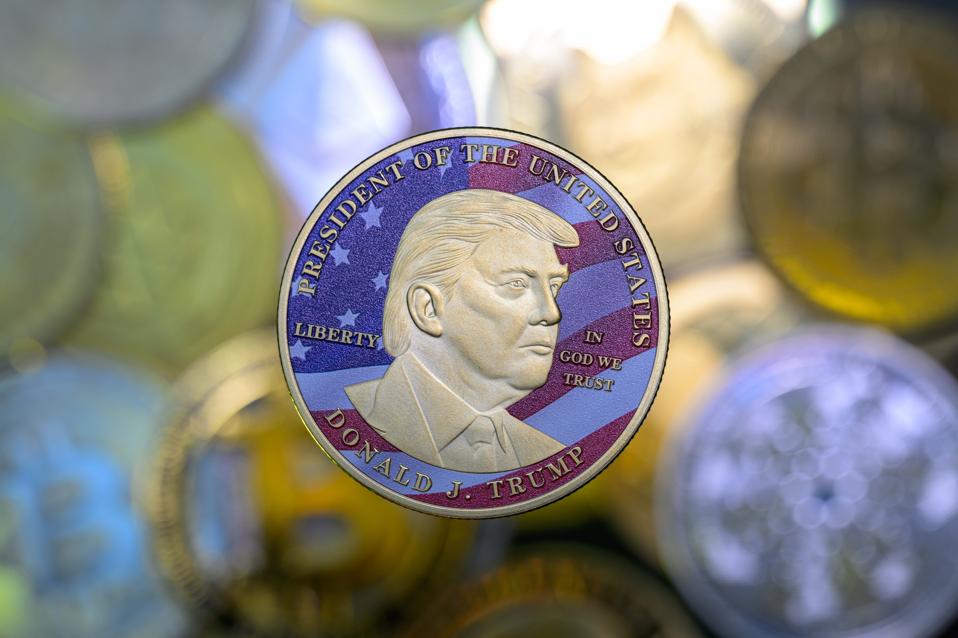
The company behind Donald Trump’s $TRUMP meme coin has announced another gala dinner, inviting the token’s top 185 holders to Trump National Golf Club near Washington, D.C., on Nov. 22. VIP status will be locked in on Nov. 12, and the three advertised “legends” have not yet been named.
The move adds a new chapter to an already controversial Trump crypto business. Similar events have drawn criticism from Democratic lawmakers, who frame them as pay-to-access promotions, while earlier reporting also said Democrats are preparing broader scrutiny of Trump family business dealings and crypto ties.
Markets reacted quickly: CoinDesk reported the token rose about 10% to $2.25 after the announcement before giving back the move. ABC News, citing financial disclosures, said Trump made about $635 million from his so-called celebration coins in 2025, underscoring why the project keeps drawing political and regulatory attention.
The event page says no attendee will get a private meet-and-greet with the president. The identity of the three guests remains undisclosed, and the organizer has not clarified how much holders must spend to qualify for a seat.
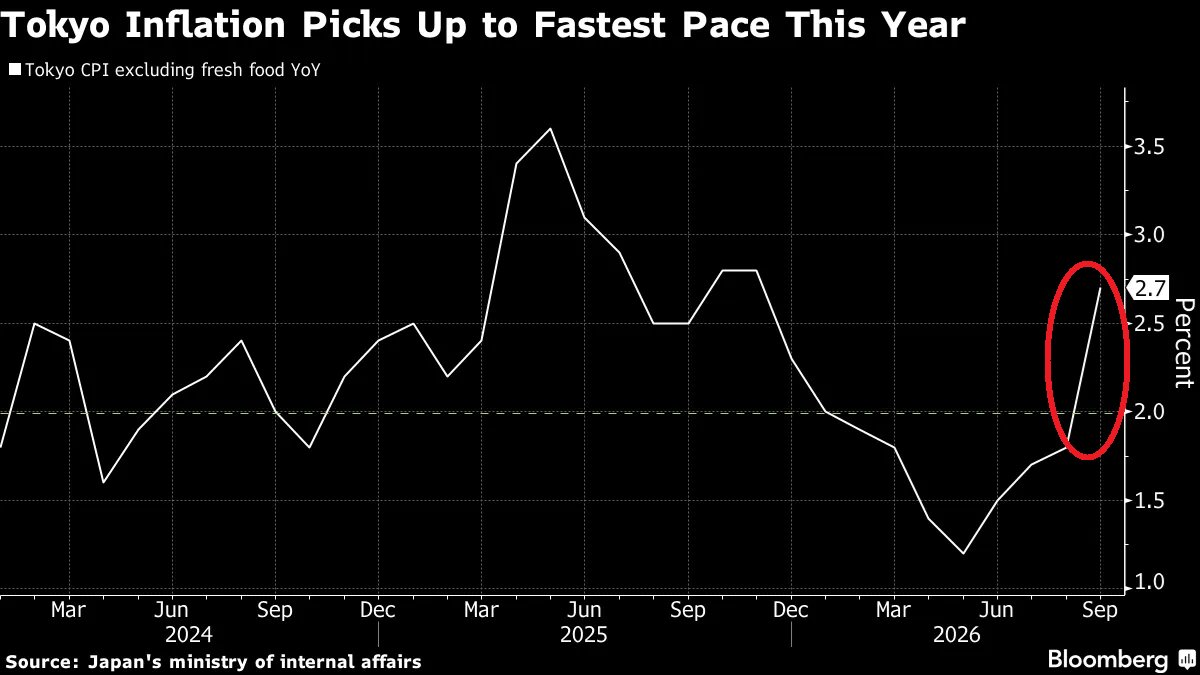
Japan’s statistics ministry said on Oct. 2 that Tokyo’s consumer prices excluding fresh food rose 2.7% in September from a year earlier, above the market forecast of 2.4%. The measure excluding both fresh food and energy climbed 3.0%, pointing to a clear pickup in inflation pressure in the capital.
Tokyo CPI is closely watched as an early read on nationwide price trends. Reported drivers included the end of a temporary water-fee subsidy and broad-based increases in food and household goods, while the August reading had been only 1.8%.
The release is likely to keep attention on Bank of Japan policy and Japanese rates markets. Reuters said the data bolsters the case for more BOJ hikes, while local reports noted investors are looking ahead to the central bank’s Oct. 29-30 meeting.
No official denial of the data has been reported. The BOJ has recently lifted its policy rate to 1.25% and has said its focus is now on preventing underlying inflation from overshooting its 2% target.
Iran’s official news agency said no talks about Iran’s nuclear programme took place during recent meetings with mediators. The statement is the latest incremental development in an already fluid Iran-U.S. channel.
That account contrasts with earlier reporting that Iranian Foreign Minister Abbas Araghchi had floated restoring inspectors’ access in exchange for sanctions relief during United Nations-side discussions. Other reports also said mediators were pressing Tehran for nuclear concessions to revive talks with Washington.
For markets, the main read-through remains geopolitical risk, especially in crude. USO is the most direct ticker in the candidate set because it tracks oil-price sensitivity to Middle East tensions and any disruption risk tied to the Strait of Hormuz.
So far, the public record still points to indirect contacts rather than a confirmed breakthrough. The key question is whether the nuclear file is actually being negotiated behind the scenes or remains outside the most recent mediator sessions.
Nasdaq said on Thursday that Moderna will join the Nasdaq-100 Index on Oct. 9, replacing Warner Bros. Discovery. The update has been widely circulated across market feeds and X posts today.
The move matters because index changes can trigger passive fund rebalancing and shift attention toward the new constituent. Reuters also reported the announcement, confirming the change as an official Nasdaq decision.
Moderna is the direct beneficiary of the inclusion, while Warner Bros. Discovery will be removed from the benchmark. The market focus now centers on MRNA and WBD as investors assess index-related flows.
No conflicting statement from either company was included in the source material. The event is the Nasdaq-100 composition change itself.
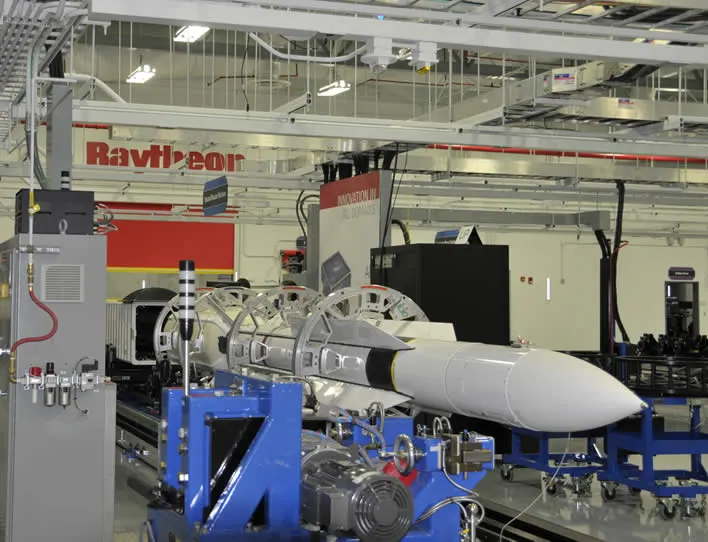
RTX’s Raytheon unit has won a U.S. Navy contract valued at up to $24.4 billion to produce Standard Missile-6 interceptors. Multiple reports on Oct. 1 described the award as a multi-year deal tied to missile production capacity.
WSJ said the contract has an initial five-year term plus two additional option years, while Reuters described it as a multiyear award. The new reporting is a confirmation of the same event line, not a separate deal.
For investors, the key takeaway is that RTX is the direct beneficiary of the order. The award also reinforces the broader replenishment theme in U.S. defense procurement, but RTX remains the central ticker in this item.
No material in the provided sources indicates a contradiction on the headline figures. The differences are in how the background is framed, not in the contract value itself.
S&P Dow Jones Indices said Twilio will enter the S&P 500 before the open on Oct. 6, replacing Warner Bros. Discovery, while Vylor has already joined the index after completing its spin-off from Corteva on Oct. 1. The changes will force index-tracking funds to rebalance holdings accordingly.
The move comes amid a broader round of corporate-action driven index turnover. Corteva’s spin-off of Vylor and Warner Bros. Discovery’s pending acquisition by Paramount Skydance are the reasons behind the replacement cycle.
For the market, the key issue is passive flow: S&P 500 additions often attract benchmark-linked buying, while deletions face the opposite effect. Twilio and Vylor both traded firmer after the announcement, reflecting the immediate reaction to the reshuffle.
Official S&P materials and follow-up coverage all point to the same effective dates and constituents. No contrary company statement has emerged to challenge the index changes.
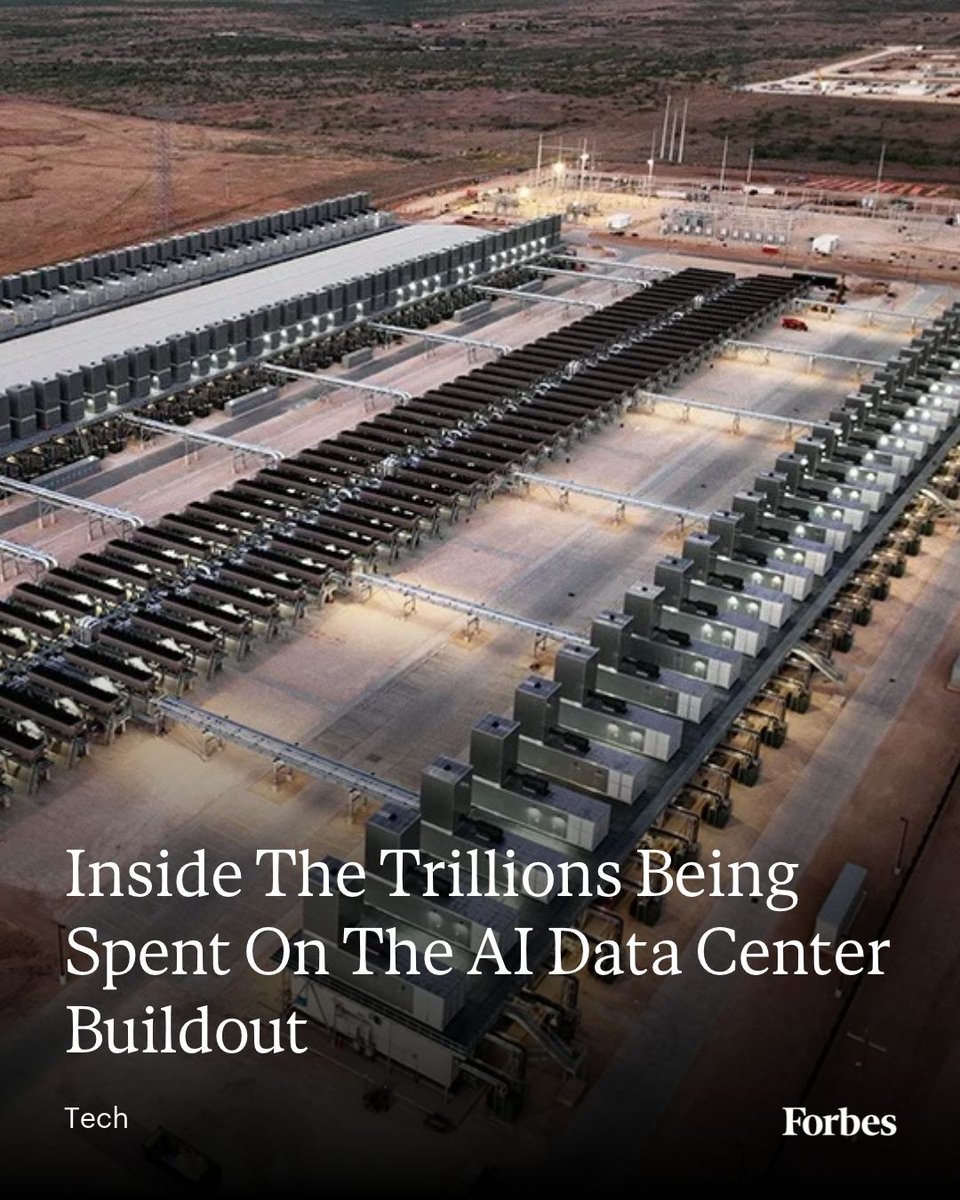
AI buildout may need $3.5 trillion in annual revenue
A Columbia professor’s latest scenario says AI services would need nearly $3.5 trillion a year by 2032 to support the current data-center spending boom.
A new scenario analysis by Columbia Business School professor Stijn Van Nieuwerburgh suggests the U.S. AI infrastructure buildout could require about $3.5 trillion in annual AI-service revenue by 2032, equivalent to roughly 8.8% to 9.2% of projected GDP. The figure is a break-even hurdle for the investment case, not a forecast of actual GDP spending.
The backdrop is a rapidly expanding AI data-center pipeline, with financing increasingly shifting beyond hyperscalers’ balance sheets into private credit, leases, joint ventures, securitizations, and SPVs. Brookings material cited in coverage puts current U.S. operating AI capacity at about 57 GW, with a planned pipeline of roughly 509 GW across 2,933 projects.
For markets, the implications run through data-center operators, power suppliers, grid equipment makers, and GPU vendors, as well as large cloud platforms funding the buildout. Recent coverage also highlighted Meta’s Hyperion project as a template for high-leverage project financing, underscoring how much of the risk is being pushed into structured vehicles.
The analysis remains a model-based scenario rather than an official policy target or company guidance. Its main point is the scale of revenue needed to justify the current pace of AI infrastructure investment under a 10% unlevered return assumption.
The Ethereum Foundation and the Open Anonymity Project have launched zkAPI, a privacy-preserving payment system that is now live on Ethereum mainnet. The setup lets users deposit ETH, USDC or other assets into a vault, then authorize spending with zero-knowledge proofs so an API provider cannot directly link requests to the wallet that funded them.
The release turns a February design for “ZK API Usage Credits” into a working deployment. The Foundation says zkAPI is aimed first at AI chat, but the same client and contracts can front other metered services, including blockchain RPC, image and video generation, VPN and machine-to-machine services.
For the broader crypto payments stack, the immediate relevance is not price action but infrastructure: it gives stablecoins and Ethereum a live example of private prepaid settlement for usage-based software. The Foundation also says the system does not hide IP addresses or prompt contents, so network privacy and content privacy remain separate layers.
zkAPI issues short-lived API keys with spending caps and settles usage after the session ends. The project says that makes payment unlinkable while still allowing providers to bill metered consumption, but it does not prevent correlation through timing, network metadata or prompt text.
A San Francisco Federal Reserve Economic Letter dated Sept. 28 says stablecoin issuers added about $200 billion in Treasury holdings between 2021 and mid-2026, offsetting more than 40% of China’s decline over the same period. Bitwise CIO Matt Hougan said the stablecoin theme is now gaining traction, and he expects the sector to keep growing materially.
The research argues that stablecoin demand is concentrated in the two largest issuers and skewed toward short-term Treasury bills. That makes the sector more than a crypto niche: it is increasingly a structural buyer of U.S. government debt.
For markets, the angle matters because stablecoin growth can influence liquidity, short-dated Treasury demand and the broader crypto ecosystem. Crypto-linked names such as Strive also traded with Bitcoin’s rebound on the day, reflecting renewed appetite for digital-asset exposure.
Hougan’s comment is a market reaction to the Fed’s analysis rather than a separate policy development. The key new evidence is the Fed’s quantification of stablecoin demand and its comparison with China’s Treasury reduction.
How this story unfolded
Company
Novartis lands up to $7.8 billion Abogen license
The deal underscores Big Pharma’s continued hunt for Chinese innovation assets as it seeks to replenish pipelines.
Novartis has signed a licensing agreement with Chinese biotech Abogen for ABO2203, an experimental autoimmune therapy, in a deal valued at up to $7.8 billion. Abogen was reported to have confirmed the agreement in the linked coverage.
The transaction fits a broader pattern of global drugmakers turning to China for novel assets. CNBC framed the Novartis-Abogen pact as part of a wider wave of multibillion-dollar deals with China-based drug developers.
For the market, Novartis is the key listed name in focus, and reports said its shares were up 0.9% premarket. The deal also highlights how Chinese biotech platforms can become strategic targets for major international pharma licensing.
No contradictory denial from Novartis was included in the source material. The available reporting comes from Abogen’s statement and follow-up coverage by Reuters, WSJ, Bloomberg and CNBC.
Ellison says post-merger Paramount-WBD company will be named Skydance
The naming decision adds another concrete step toward closing the merger and clarifies how the combined media group plans to preserve its studio brands.
Reuters reported on Friday that Paramount Skydance CEO David Ellison said the combined company will be called Skydance once the merger with Warner Bros. Discovery closes next week. He said the name was chosen so Paramount and Warner Bros. can retain their separate brand identities rather than be folded into a new corporate label.
The comment is the latest incremental development in a deal process that has already cleared major hurdles. Reuters reported on September 30 that a U.S. judge allowed Paramount to close its $110 billion acquisition of Warner Bros. Discovery after approving a settlement with a California-led group of 12 states.
For investors, the statement matters because it signals that the integration plan is moving forward for PSKY and WBD, even as the operational and financing work still lies ahead. The combined company is also expected to keep juggling the merger’s scale and the post-deal governance setup, including Ynon Kreiz’s planned role as co-CEO.
Ellison’s framing suggests the company wants the Skydance name to serve as the umbrella brand while preserving the legacy identities of Paramount and Warner Bros. studios. That clarification follows earlier company communications that continued to refer to the business as the combined Paramount and Warner Bros. Discovery or as Paramount Skydance Corporation.
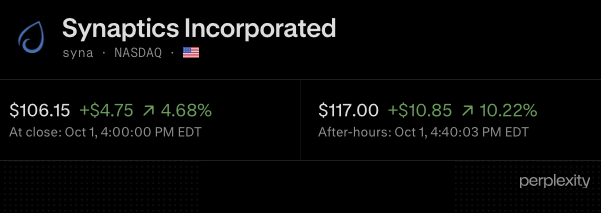
onsemi and Synaptics have amended their merger agreement into an all-cash deal at $123 per share, valuing Synaptics at about $5.7 billion. Multiple reports say that is down from the roughly $7 billion deal announced in June.
The revised terms follow a review of an unsolicited third-party proposal, according to the company coverage in the news library. A GlobeNewswire release said the amendment is intended to deliver higher onsemi shareholder value through immediate EPS accretion.
Shares of both companies moved sharply higher in premarket and after-hours trading, making the renegotiated price the main market catalyst. For onsemi, the lower purchase price cuts the acquisition cost by about $1.3 billion while leaving more than $200 million in annual synergies expected.
Firstsquawk said the transaction will be funded with cash and committed debt financing from Morgan Stanley. The available reports focus on the revised terms and financing structure rather than any fresh public response from either company.
NEAR Intents said it has identified the person behind the incident that led to about $3.8 million in user losses and gave the party 48 hours to return the funds. The team also posted wallet addresses for Bitcoin, BNB and Solana transfers.
The security breach stemmed from a bug in the protocol’s Omni deposit and withdrawal infrastructure interaction with its smart contract, according to the project’s earlier statement. NEAR Intents said the issue has been patched and that affected users will be reimbursed in full.
The immediate market relevance is centered on NEAR Intents’ cross-chain service and its reputation for handling swaps, rather than the NEAR blockchain’s core functionality. What happens next depends on whether any funds are returned and how quickly the project publishes its incident report and repayment plan.
The project has not publicly explained how it traced the suspect and has not confirmed any recovered funds. Blockchain investigator ZachXBT previously said the assets were moved to KuCoin and bridged to Bitcoin.
Rivian said third-quarter deliveries reached 19,248 vehicles, topping the 18,000 estimate in the materials provided. Production came in at 19,751 vehicles, and the company reiterated its full-year 2026 delivery guidance of 67,500.
The update is the latest official quarterly delivery release from Rivian, with Reuters and Business Wire both carrying the same core figures. Rivian also said the R2 SUV production ramp is ongoing.
The report matters for RIVN because deliveries are a key operating metric for EV investors. The market is also focused on whether the R2 can help broaden Rivian’s customer base and support future volume growth.
No additional company response was included in the source materials beyond the delivery update itself. Investors now await the company’s third-quarter financial results for a fuller read on execution.
Japan’s Ministry of Internal Affairs and Communications said on Oct. 2 that the seasonally adjusted unemployment rate for August rose to 2.5% from 2.4% in July. The Ministry of Health, Labour and Welfare also said the jobs-to-applicants ratio was 1.18, unchanged from the prior month.
The latest print comes as labor-market conditions remain tight by historical standards, even though new job postings have eased. Nikkei reported that new job openings fell 3.4% from a year earlier, while Jiji said the number of unemployed people increased by 100,000 to 1.77 million and the rise in unemployment was driven largely by voluntary departures.
For markets, the data matter mainly as a read-through on wages, consumer demand and the persistence of labor shortages rather than as a standalone trade catalyst. Investors will also watch whether hiring plans and wage negotiations keep pace with broader economic activity.
Daiwa Institute of Research said the overall employment environment remained broadly flat, though it noted that the new jobs-to-applicants ratio eased and hiring sentiment looks less buoyant than before.
Social-media chatter is centering on PepsiCo’s dividend again, with one post claiming the stock’s yield is at a more than 20-year high, around 4.5%. The key point is not the exact number alone, but the market’s renewed focus on cash return as the shares have softened.
The backdrop is an earnings-heavy week for PepsiCo. Recent coverage has said the company is due to report next week, while analysts are watching pricing power, margin pressure and the pace of recovery in North America; Reuters also reported that PepsiCo and Monster Beverage have sued India’s food regulator over a ban on the use of the term “energy drink.”
For markets, the main ticker in play is PEP, and the move is being read through the lens of defensive-income stocks more broadly. If investors keep treating PepsiCo as a high-yield staple, the stock’s dividend profile may matter as much as the company’s near-term growth narrative.
That said, the 4.5% figure comes from a social post and should be treated as a claim until it is checked against the latest share price and payout data. What is clear is that PepsiCo is back on investors’ radar as a dividend name heading into its results.
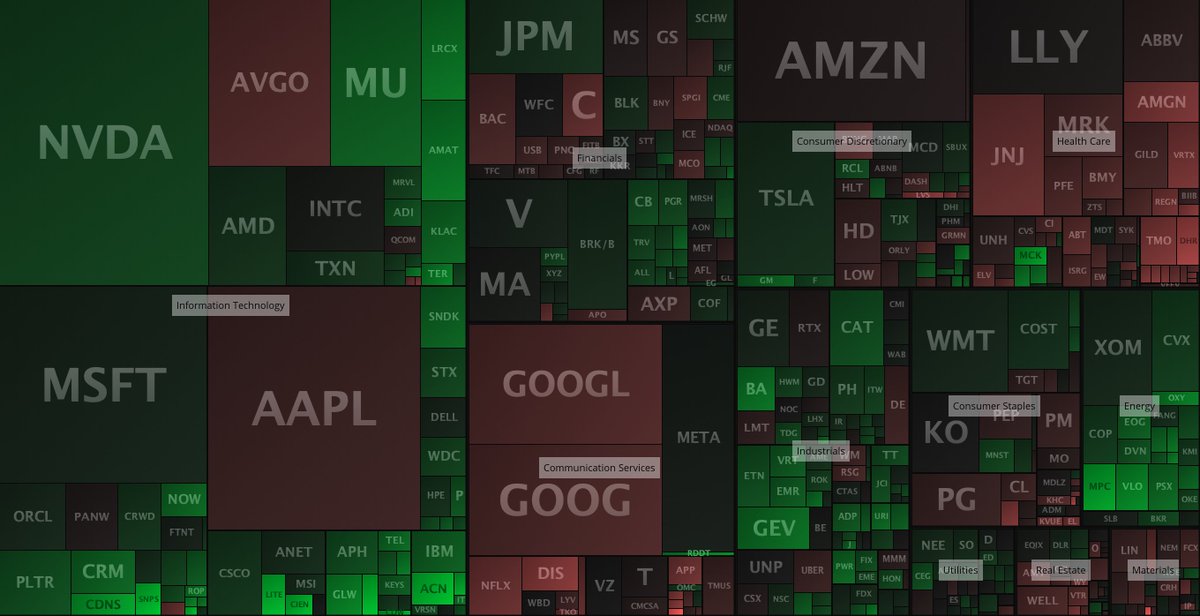
In today’s X flow, traders focused on whether SPY can hold near 760, with 757 cited as the next crack point and a lower monthly value area below that. The discussion also referenced the 7,635 weekly expected-move lower bound, keeping attention on short-term support rather than a clean directional call.
The backdrop is a market where the index is still holding up better than breadth. Saxo reported the S&P 500 closed Oct. 1 at 7,666.45, while the equal-weight fund outperformed the cap-weighted version; it also said implied correlation rose to 11.74 and dispersion eased, reinforcing the idea that stocks are moving more together.
That matters most for SPY, RSP and ES, because the headline index can stay resilient even while participation stays weak. In this kind of setup, traders are leaning on support zones and breadth signals more than on the index print alone.
The same session also saw rate-sensitive and growth-linked names in focus, with X posts noting a rebound in TLT and a sharp move in COHR. The incremental takeaway today is not a forecast, but a tighter watch on support, correlation and whether the index keeps outrunning the rest of the market.
Google launches Gemini 4 Argon with limited rollout
The flagship model is first going to cybersecurity partners, while investors still care more about whether it can turn into a real enterprise and consumer product
Google launched Gemini 4 Argon on Oct. 1 and is initially restricting access to trusted cybersecurity partners and enterprise cloud customers. The company says the model is designed for long-horizon reasoning and complex enterprise work, including software engineering, finance, legal work and cyber defense.
The release comes as Google tries to close the gap with OpenAI and Anthropic at the model frontier. CNBC reported that Argon posts strong benchmark results in some areas, but analysts say the bigger test is whether Google can translate model strength into widely used agent products.
For markets, the key question is less about benchmarks than monetization. Google priced the model at $2 per million input tokens and $10 per million output tokens for the introductory period, with rates later set to rise, while investors continue to watch Alphabet, Google Cloud and cybersecurity-related names for spillover effects.
Google also said the model is in a voluntary U.S. government pre-release safety-testing process. The company has not given a public release date for broad availability, underscoring that this is still an early commercial rollout rather than a full launch.
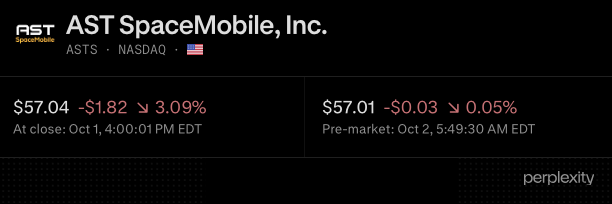
B. Riley downgraded AST SpaceMobile (ASTS) to Neutral from Buy and cut its price target to $65 from $85. Analyst Crawford said the stock’s risk-reward has “swung back toward balance.”
The call cited “arguably stronger competitive alternatives,” a delayed launch, and rising constellation costs, potentially including additional spectrum. The latest X signal is the new incremental development: a fresh analyst reassessment of the company’s outlook.
For the market, the move squarely centers on ASTS. It is a valuation and execution debate, not a new operating disclosure, and it may keep investor attention on launch timing and cost discipline.
A company response was not included in the available materials.
Elon Musk said on X that he is “cautiously optimistic” SpaceX will be able to run its version of Nvidia’s VR72 at close to 250kW average power, with peak power about 10% higher. The statement was quickly echoed by multiple real-time news wires on Oct. 2.
The remark matters because sustained power delivery is a key constraint for high-intensity AI infrastructure. Recent reporting also says SpaceX has already lined up large compute-related arrangements involving Google and Anthropic, reinforcing the company’s growing AI buildout.
In the market, the update pointed traders toward SPCX and, by extension, Nvidia as investors weighed the implications of a closer SpaceX-Nvidia engineering partnership. But Musk did not provide a rollout timetable or specify workloads, so the post is best read as a technical target rather than a confirmed deployment milestone.
For now, the confirmed development is the new public signal from Musk, not an independently verified production achievement. Any eventual success would need to be validated by further company disclosure or third-party technical evidence.
Tavus said its new Griffin model is built for real-time, face-to-face video conversations. In the company’s live study, 48% of participants reportedly thought they were speaking with a real person rather than an AI system.
The latest signal adds fresh detail to Griffin’s launch: the model is being positioned as both conversational and visual, with X posts saying it nearly matched humans on NVIDIA’s VideoFDB benchmark. The posts also describe it as outperforming published AI systems on that benchmark.
For NVDA, the mention is mostly contextual, reinforcing how its benchmarking ecosystem remains part of the AI product conversation. For Tavus, the takeaway is the push beyond text chatbots toward more natural multimodal interaction in live video.
No independent verification was included in the provided materials, and Tavus did not provide additional quoted comment in the signal set. The claims should therefore be read as company-reported results and social-media retellings.
AstraZeneca and Daiichi Sankyo have entered into a clinical trial collaboration with Summit Therapeutics to evaluate Datroway in combination with Summit’s ivonescimab. Reuters and the company announcements describe the effort as a clinical collaboration focused on cancer drug testing.
The news extends a relationship that now includes multiple tumor types in the trial framework. Summit’s own announcement, alongside the joint statement carried in the company news releases, confirms the same core terms of the collaboration.
The market relevance centers on AZN and SMMT, since both companies are directly tied to the combination study. For investors, the key point is that the trial plan gives another concrete step in the development of the Datroway-ivonescimab pairing.
No trial readout or regulatory decision was included in the material. The available reports are aligned, and there is no denial from any of the parties in the provided sources.